In today’s digital age, having a strong online presence is crucial. SEO, or Search Engine Optimization, helps improve your website’s visibility on search engines like Google. With good SEO, more people can find your website when they search for related topics. So, how to increase SEO?
To increase SEO, optimize your website content with relevant keywords. Improve your site speed and ensure it is mobile-friendly. Build high-quality backlinks from reputable sites. Regularly update your content to keep it fresh and relevant. Use tools like Google Analytics to track performance.
In this guide, we’ll explore the best techniques to improve SEO. We’ll cover keyword research, on-page optimization, technical SEO, and link building.
Key Takeaways
- Optimize Content: Use targeted keywords to improve search engine rankings and visibility.
- Enhance User Experience: Increase site speed and ensure mobile compatibility to boost user experience.
- Build Backlinks: Get high-quality backlinks from reputable sources to improve site authority and ranking.
What Is SEO?
Search Engine Optimization, or SEO, enhances your website’s visibility on search engines like Google. By enhancing your SEO, your site appears more frequently in search results for relevant keywords. It involves optimizing content, improving site speed, and ensuring mobile compatibility.
Goals Of SEO
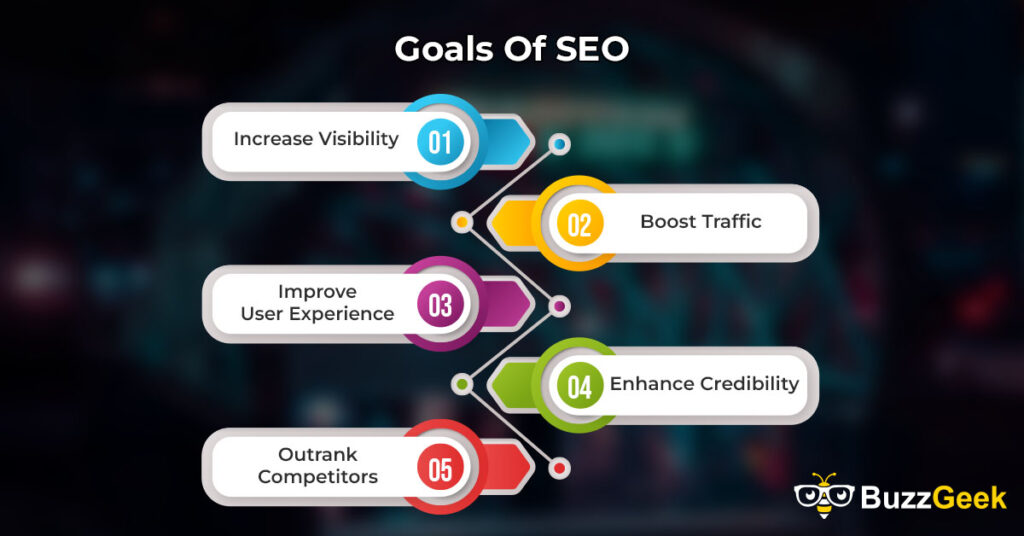
Achieving strong SEO is crucial for any website looking to increase its online presence. The effectiveness of SEO can significantly impact a website’s reach and success. It involves a variety of strategies and objectives designed to enhance the online presence of a business or individual. Here are some key goals of SEO:
- Increase Visibility: The primary goal of SEO is to make your website more visible in search results. This helps more people discover your website organically.
- Boost Traffic: Enhanced SEO drives more traffic to your site. This can lead to higher engagement, more subscriptions, and increased sales.
- Improve User Experience: SEO also focuses on user experience, ensuring that your website is easy to navigate and engage with. This increases the likelihood that visitors will stay on your site longer and explore more pages.
- Enhance Credibility: Higher rankings in search results can improve your site’s credibility. Users tend to trust sites more when they appear at the top of search results.
- Outrank Competitors: By implementing effective SEO strategies, you can rank higher than your competitors, making it more likely that potential customers will come to you first.
Step 01: Keyword Research
Keyword research is a fundamental SEO strategy. It involves identifying the exact words and phrases that people type into search engines. This process is essential for directing the right traffic to your website.
Identify Relevant Keywords
Begin by listing keywords that closely relate to your products or services. For example, if you run a coffee shop, relevant keywords may include “best espresso coffee” or “organic coffee beans near me.”
These terms are what potential customers are likely to search for when looking for the products you offer.
Long-Tail Keywords
Focus on long-tail keywords, which are longer, more specific phrases that tend to be less competitive and more targeted. An example of a long-tail keyword could be “affordable organic coffee beans in New York.”
These keywords are great for attracting customers who are looking for exactly what you offer. Also, they are often ready to make a purchase.
Competitor Analysis
Analyzing what keywords your competitors are targeting can reveal gaps in their strategies and opportunities for you. Tools like Ahrefs can help you see the keywords for which your competitors rank and their search traffic sources. This allows you to refine your keyword strategy to better compete.
Keyword Tools
Use tools such as Google Keyword Planner or SEMrush for keyword research. These tools provide insights into keyword popularity, competition levels, and trends.
For example, typing “coffee beans” into Google Keyword Planner may suggest related terms like “best coffee beans for espresso.” This can help you target your SEO efforts more effectively.
Step 02: On-Page Optimization
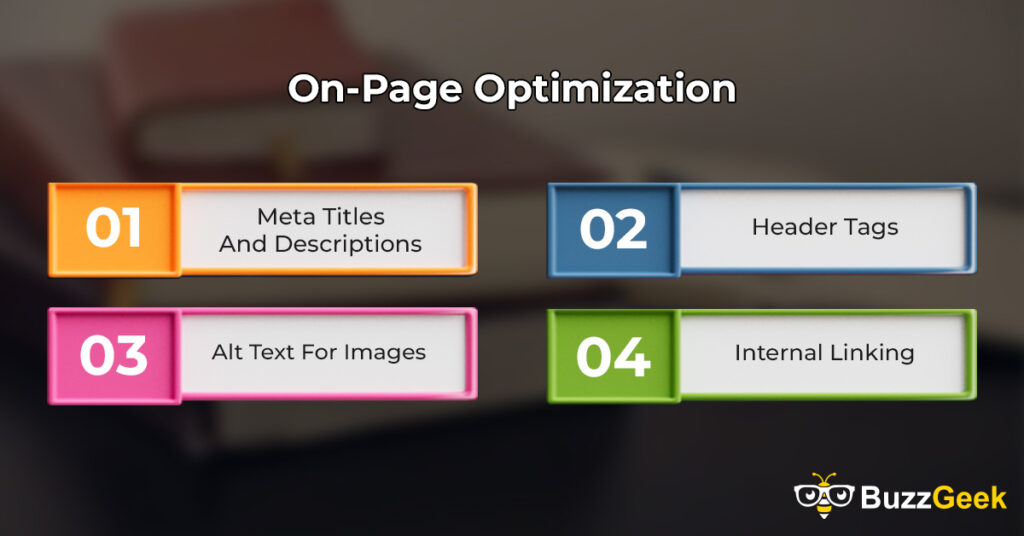
On-page optimization is a crucial step in SEO that involves refining the content and structure of your website. This process ensures that your site is attractive not only to search engines but also to the visitors who browse your pages. It includes optimizing meta titles, descriptions, header tags, image alt texts, and internal linking.
Meta Titles And Descriptions
Meta titles and descriptions are brief texts that describe a webpage’s content; they appear in search engine results. For example, a good meta title for a bakery may be “Fresh Organic Breads – ABC Bakery.”
The description can be “Explore ABC Bakery’s range of fresh, organic breads baked daily in Chicago. Visit us or order online!” These elements are crucial because they influence whether someone clicks on your link.
Header Tags
Header tags (H1, H2, H3, etc.) help organize your content for readers and search engines. They should include keywords related to the content of your page.
For example, a main header (H1) can be “Organic Bakery Goods,” with subheaders (H2) like “Our Bread Selection” and “Why Choose Organic?”
Alt Text For Images
Alt text is a brief description of an image, which helps search engines understand what the image is about. It’s also used for accessibility, helping people who can’t see the image understand what it represents.
For instance, an image of a chocolate cake on your site might have alt text that reads “chocolate layer cake with vanilla frosting.”
Internal Linking
Internal linking involves linking to other pages within your website. This helps search engines discover new pages and determine their importance based on how many other pages link to them.
For instance, a page about “Organic Baking Ingredients” might link to related pages like “Gluten-Free Recipes” or “Benefits of Organic Eating.” This not only helps with SEO but also keeps visitors on your site longer.
Step 03: Quality Content
Quality content is very important for SEO. It helps attract and keep visitors on your site. Good content is original, engaging, and useful. It should be updated regularly and focus on what users want. Readability and good formatting also make your content better.
Original And Engaging Content
Your content needs to be original and interesting. Do not copy from other websites. It’s important that your content stands out and holds the audience’s attention.
For example, if you run a cooking blog, you could create posts like “5 Unique Recipes You Can Cook Under 20 Minutes.” Engaging content keeps visitors on your site longer and encourages them to return.
Regular Updates
Updating your content regularly is important. Search engines prefer fresh content. For instance, if you run a news site, you need to post new articles daily.
Regular updates show that your site is active and current. This can help improve your search engine rankings.
User Intent Focus
Focus on what your users are looking for. Understand their needs and provide answers. For example, if people search for “how to plant a garden,” write detailed guides on gardening.
Content that meets user intent will attract more visitors and keep them engaged. This helps improve your SEO.
Readability And Formatting
Make sure your content is easy to read and well-organized. Use short sentences, simple words, and paragraphs. Use headings and bullet points to break up text.
For example, a how-to article can use numbered steps and pictures to guide readers. Good readability and formatting help users understand and enjoy your content. This can lead to better SEO performance.
Step 04: Technical SEO
Technical SEO is very important for improving your website’s performance. It involves making technical changes to your site to help search engines crawl and index it better. Here’s what it includes:
Site Speed
Site speed is crucial for a good user experience and better SEO. A fast-loading site keeps visitors happy and reduces bounce rates.
For example, you can improve site speed by compressing images and minimizing code. Faster sites rank higher in search results because search engines prefer quick-loading websites.
Mobile Optimization
Mobile optimization ensures your website works well on smartphones and tablets. Many people use mobile devices to browse the internet. Your site should have a responsive design that adjusts to different screen sizes.
Buttons and links should be easy to tap. A mobile-friendly site improves user experience and can boost your search engine rankings.
XML Sitemap
An XML sitemap is a file that lists all the pages on your website. It helps search engines find and index your content. Creating an XML sitemap makes it easier for search engines to understand your site’s structure.
For example, if you add new pages, they will be quickly discovered and indexed with an up-to-date sitemap.
Structured Data
Structured data is code that helps search engines understand your content better. It provides additional information about your site’s content. For example, if you run a recipe site, structured data can highlight ingredients, cooking times, and ratings.
This can lead to rich snippets in search results. It can improve your click-through rates and SEO.
Step 05: Link Building
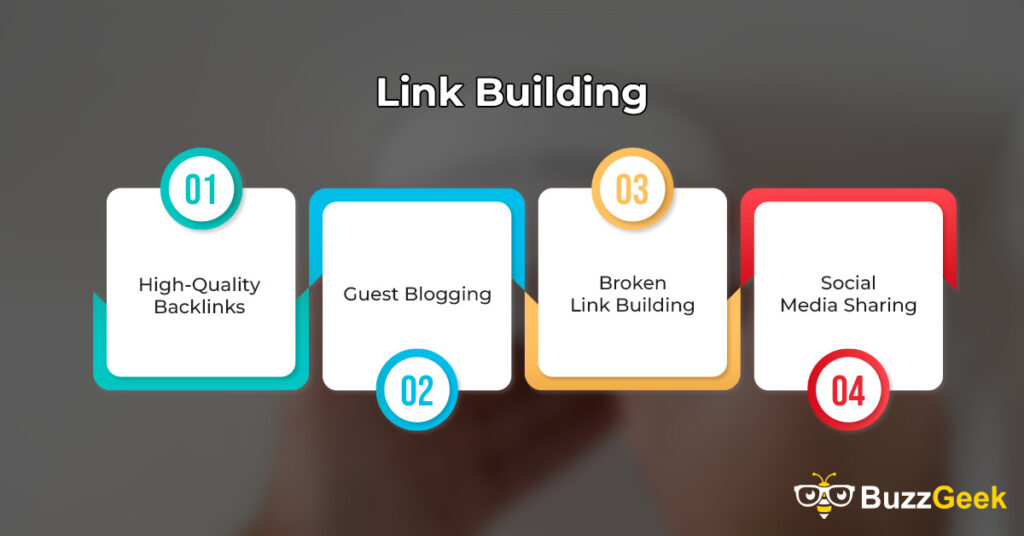
Link building is a key SEO strategy that involves getting other websites to link back to your site. These links act as endorsements, which can improve your site’s authority and ranking on search engines. The process includes strategies like acquiring high-quality backlinks, guest blogging, fixing broken links, and promoting content on social media.
High-Quality Backlinks
High-quality backlinks come from reputable and relevant websites. For example, a backlink from a popular health blog to your fitness website can boost your site’s credibility.
Search engines see these links as signs that your content is valuable. This can improve your rankings.
Guest Blogging
Guest blogging involves writing articles for other blogs in your industry. This not only gives you access to a new audience but also provides a backlink to your site.
For instance, if you run a tech startup, consider writing a guest post for a well-known tech review site. It can attract visitors interested in technology.
Broken Link Building
This strategy involves finding broken links on other websites and offering your content as a replacement. For example, if you find a broken link on a blog about gardening, you could suggest replacing it with a link to a relevant article on your own gardening site. This helps webmasters fix site issues while you gain a new backlink.
Social Media Sharing
Promoting your content on social media platforms can lead to more backlinks. When you share interesting articles or videos, people might link back to them from their websites or blogs.
For example, sharing a unique recipe on your food blog’s Facebook page can encourage cooking enthusiasts to repost and link to your content. This can increase your site’s exposure and backlink count.
Step 06: Performance Tracking
Performance tracking is very important for SEO. It helps you see how well your website is doing. By tracking performance, you can find out what works and what needs improvement. Adjusting your strategies based on this data is essential.
Google Analytics
Google Analytics is a free tool that gives detailed information about your website traffic. It shows how many people visit your site, where they come from, and what pages they look at.
For example, if you have a blog, Google Analytics can tell you which posts are most popular. This helps you understand your audience and improve your content.
Search Console
Google Search Console helps you monitor and maintain your site’s presence in Google search results. It shows which search terms bring people to your site and any errors that need fixing.
For example, if there is a problem with your site’s mobile usability, Search Console will alert you. Fixing these issues can improve your SEO.
KPI Monitoring
KPIs, or Key Performance Indicators, are metrics that show how well your site is performing. Important KPIs include page load time, bounce rate, and conversion rate.
For example, if your bounce rate is high, it means visitors leave your site quickly. Monitoring KPIs helps you identify problems and make necessary changes to improve user experience.
Adjusting Strategies
Based on the data from Google Analytics, Search Console, and KPIs, you need to adjust your SEO strategies. For example, if a certain keyword drives a lot of traffic, you might create more content around that keyword.
Or if visitors leave your site quickly, you might improve your page’s load speed or content quality. Regular adjustments ensure your SEO efforts remain effective.
FAQs
What Are The Key Factors For SEO?
The key factors for SEO are keywords, quality content, technical SEO, backlinks, and performance tracking. Keywords help search engines understand your content. Quality content attracts visitors. Technical SEO ensures your site runs well. Backlinks help build your site’s authority.
What Is The Role Of Keywords In SEO?
Keywords play a very important role in SEO. They help search engines understand what your content is about. When people search for those keywords, your site can show up in the results. Using the right keywords can bring more visitors to your site. Keywords should be relevant to what your website offers.
How To Find The Best Keywords?
To find the best keywords, start by thinking about what words people use to search for your products or services. Use tools like Google Keyword Planner, Ahrefs, or SEMrush to see how often these words are searched. Look at what keywords your competitors use. Also, focus on long-tail keywords.
What Makes Content High-Quality?
High-quality content is original, useful, and engaging. It should be well-researched and provide value to the reader. The content must be easy to read with simple language and good formatting. It should answer the questions that your audience has. Regularly updating content also helps keep it high-quality.
Why Are Meta Titles And Descriptions Important In SEO?
Meta titles and descriptions are important because they show what your page is about. They appear in search results and can help people decide whether to click on your link. Well-written meta titles and descriptions can improve your click-through rates. It makes your site more attractive to visitors.
How Does Site Speed Affect SEO?
Site speed affects SEO by influencing user experience. A fast site provides a better user experience. Search engines like Google prefer fast-loading sites and rank them higher in search results. Slow sites can lead to high bounce rates, where visitors leave quickly, hurting your SEO.
Conclusion: How To Increase SEO Ranking
Improving SEO is important for making your website more visible. By following the steps outlined here, you can boost your site’s rankings. Using tools like Google Analytics and Search Console helps you track progress and make needed changes. With consistent effort, your SEO will improve over time.