Is SEO worth it for small business? This is a question many small business owners ask. With so much focus on digital marketing, knowing if SEO makes a difference for a smaller company is important.
SEO helps your business appear higher on search engines like Google. It drives more people to your website, which leads to more sales. The best part? SEO doesn’t require constant spending like ads. Once you set it up, it keeps working for you long-term, attracting customers without extra costs.
Are you curious about how SEO can grow your business? Read the rest of the article to learn the benefits of SEO and how it can give your small business the edge it needs.
Key Takeaways
- Cost-Effective Marketing: SEO boosts online visibility for small businesses, attracting more traffic without the high costs of paid advertising.
- Long-Term Benefits: Implementing SEO can provide sustained growth, improving search rankings and customer engagement over time.
- Competitive Edge: SEO helps small businesses compete with larger companies by targeting niche markets and local search queries.
What Is SEO?
SEO stands for Search Engine Optimization. It is a way to make your website more visible on the internet. When you use SEO, you help search engines like Google find your site more easily.
This happens because you tailor your website’s content, such as words, images, and design, to match what people are searching for online.
Imagine you have a shop that sells toys and wants more people to visit. SEO is like putting up big, bright signs that guide people to your store, but instead of on the street, it’s on the internet.
By using the right signs, or in this case, keywords, more people can find your store when they search for toys online.
SEO involves different tasks. You might need to change how your website looks, the words you use, and even how fast it loads on phones and computers. All these changes aim to make your website more inviting to visitors and search engines alike.
The better your SEO, the higher your website appears in search results, making it more likely that people will click on it.
Benefits Of SEO For Small Businesses
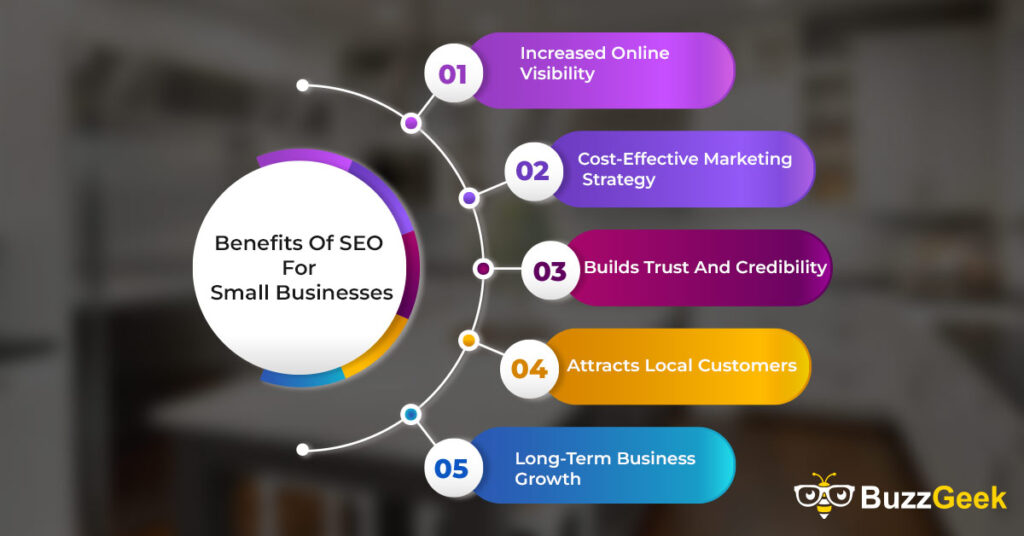
SEO helps small businesses grow by improving how people find them online. It’s an essential tool to compete and succeed in a crowded marketplace. With the right SEO strategy, small businesses can get more visitors, build trust, and attract loyal customers. Let’s look at how SEO helps in key areas:
Increased Online Visibility
SEO makes it easier for customers to find your business online. Using the right keywords, your website can appear on search engines when people look for products or services you offer. The more visible you are, the more traffic your site gets. This can lead to more sales and a stronger online presence.
Cost-Effective Marketing Strategy
SEO is one of the most affordable ways to market a small business. Unlike paid ads, which cost money every time someone clicks, SEO keeps bringing traffic over time. It works for you long after the initial effort, making it a great investment for businesses with smaller budgets.
Builds Trust And Credibility
When your website appears at the top of search results, it tells customers your business is trustworthy. SEO focuses on creating quality content and a good user experience. Once visitors find useful information on your site, they are more likely to trust your brand and return for more.
Attracts Local Customers
Local customers are key for small businesses. Local SEO helps you appear in search results when people in your area look for services or products similar to yours. You can also get featured in Google’s “local pack,” highlighting businesses near the user. This can drive more foot traffic and calls to your business.
Long-Term Business Growth
SEO offers long-lasting results. While it takes time to see the impact, the growth it brings stays for the long term. By constantly updating your website with quality content and following SEO best practices, your business will keep growing as more customers find you online.
Challenges Of SEO For Small Businesses
SEO, or search engine optimization, can be tough for small businesses. The process helps websites appear higher in search results but comes with challenges. Let’s explore these issues to understand how to manage them better.
Competitive Industry Landscape
Small businesses often face stiff competition from bigger companies. These large companies have more money and resources to spend on advanced SEO strategies, making it hard for smaller businesses to stand out in search results.
To compete, small businesses must find niche keywords that big companies overlook. They also need to focus on local SEO, making sure their business shows up in local search queries.
Time-Consuming Strategies
SEO is not a quick fix. It takes time to see results. Small businesses must research keywords, create quality content, and optimize their websites. This ongoing effort can greatly benefit a small business, especially with limited staff.
Requires Consistent Updates
Google often changes its algorithms. This means a website’s SEO strategy must also change to stay effective. Small businesses must keep their content fresh and relevant. They need to update their website often to meet new SEO rules and maintain their search rankings.
Difficulty In Measuring ROI
One of the biggest challenges is determining whether SEO is paying off. Tracking the return on investment (ROI) from SEO activities is difficult. It’s difficult to link specific sales or traffic directly to SEO efforts. Small businesses need to use analytics tools to track their progress and make adjustments based on data.
Managing SEO On A Budget
SEO can be costly, but small businesses usually have tight budgets. They must be smart about where they spend their money and prioritize SEO tasks that offer the most benefit.
For example, they might focus on optimizing their site for local search or creating engaging content for their target audience.
Comparing SEO To Other Marketing Methods For Small Business
Many options come to mind when small businesses think about boosting their visibility. SEO, or Search Engine Optimization, stands out because it helps your website rank higher in search results. Let’s compare SEO with other marketing methods to see what works best for small businesses.
SEO Vs. Paid Advertising
SEO and paid advertising are two powerful ways to attract visitors to your site. SEO is about making your site better for search engines and users. It takes time but leads to long-lasting results.
You don’t pay for clicks, which saves money in the long run. Paid advertising gives you instant visibility. You pay to appear at the top of search results. The downside? Once you stop paying, the traffic stops, too.
SEO Vs. Social Media Marketing
Social media marketing uses platforms like Facebook and Instagram to reach potential customers. It’s great for brand awareness and engagement. SEO focuses on attracting traffic through search engines.
It often attracts people who are actively looking for what you offer. Social media helps you connect and engage with people, and SEO helps you get found by those ready to buy or learn more.
SEO Vs. Email Marketing
Email marketing involves sending messages to a list of subscribers. It’s good for keeping in touch with current customers. SEO helps you reach new and old customers who search for your services or products.
While email is great for direct communication, SEO expands your reach and brings in new leads and customers.
SEO Vs. Content Marketing
Content marketing and SEO often go hand in hand. Content marketing focuses on creating useful and engaging content.
This content needs to meet the needs of your audience. SEO makes sure more people see this content by improving your site’s visibility in search engines. While content marketing is about creating the right content, SEO ensures it reaches a wider audience.
Key SEO Strategies For Small Businesses
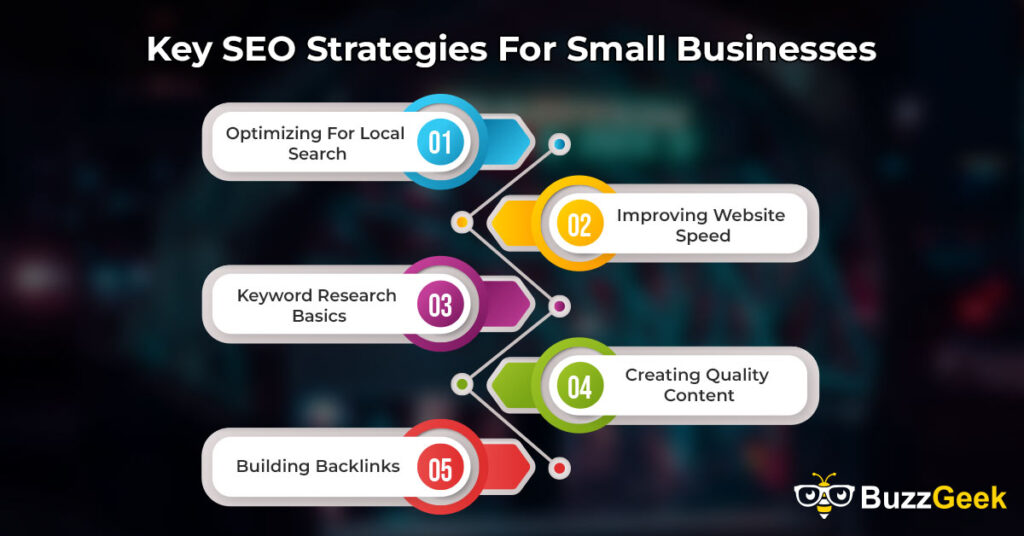
Small businesses need effective SEO strategies to compete online. By using key SEO practices, they can improve their visibility, reach more customers, and grow their business. Let’s dive into small businesses’ core strategies for ranking higher and attracting more traffic.
Optimizing For Local Search
Local search optimization helps small businesses attract nearby customers. It includes creating and maintaining a Google Business Profile, ensuring the business name, address, and phone number (NAP) are consistent across the web. Adding location-based keywords to website content helps businesses appear in local search results.
Improving Website Speed
Website speed plays a big role in SEO. A slow-loading site can push visitors away, which lowers search rankings. Speed improvements include optimizing images, using browser caching, and reducing server response times. These steps ensure a smooth user experience, keeping visitors on the site longer.
Keyword Research Basics
Keyword research is the foundation of a strong SEO strategy. It involves finding the words and phrases potential customers use to search online. By targeting specific, relevant keywords, small businesses can attract more traffic. Tools like Google Keyword Planner help identify popular search terms in their industry.
Creating Quality Content
Creating valuable and informative content is key for SEO. When small businesses produce content that answers customer questions or solves problems, search engines rank them higher. Blog posts, videos, and infographics are great ways to provide useful information and build trust with the audience.
Building Backlinks
Backlinks, or links from other websites to yours, improve search rankings. The more quality backlinks a site has, the more credible it appears to search engines. Small businesses can build backlinks by creating shareable content, guest blogging, and connecting with local or industry websites.
Measuring SEO Success For Small Businesses
For small businesses, knowing if SEO works is key. You can see how well your SEO efforts are doing by checking different parts of your website and marketing. Let’s dive into how you can measure this success.
Tracking Website Traffic
One of the main ways to check SEO success is to look at your website traffic. Use tools like Google Analytics to see how many people visit your site each day, week, or month. You want to see these numbers go up.
This means more people are finding your website through search engines. Look for trends in which pages get more visits. This shows what your customers like.
Monitoring Keyword Rankings
Keywords are the words people use to search for your services or products. Use SEO tools to track how your keywords perform in search engines.
You want your chosen keywords to appear higher in search results. When your keywords rank well, it means people can find your website easier when they use those words in their searches.
Analyzing Conversion Rates
Getting visitors is good, but making them customers is better. Check how many visitors buy something, sign up, or contact you. This is your conversion rate. A good SEO strategy brings more visitors and increases your conversion rates. It turns visitors into buyers.
Adjusting Based On Performance
After tracking all this data, use what you learn to improve your website. When some pages do not attract visitors, try improving them with better keywords or content. If some keywords do not work well, find new ones that attract more customers.
Keep testing different things on your website. See what changes make your site perform better in search results and bring more business.
When To Hire SEO Professionals
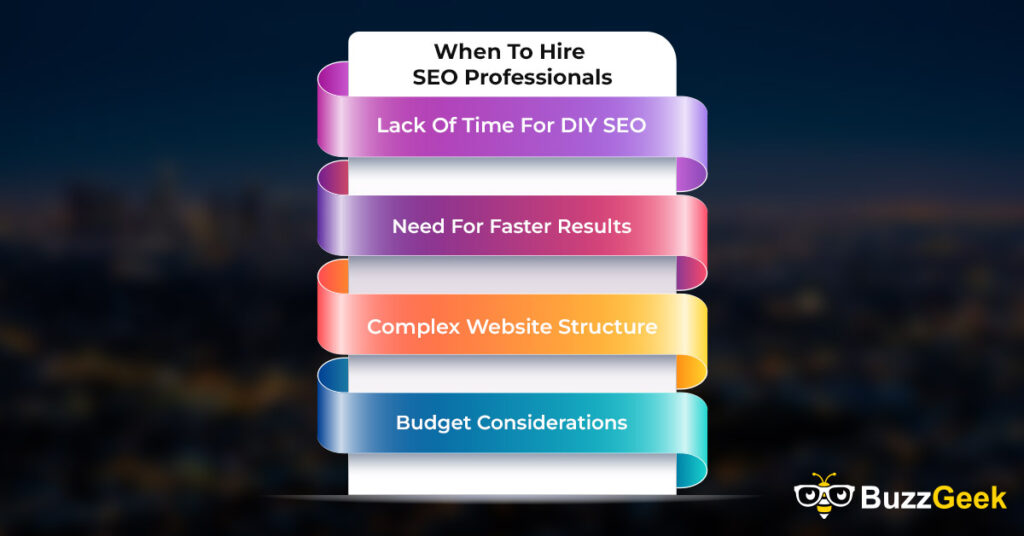
Running a small business can be time-consuming, and SEO is essential for online success. While some business owners try to handle SEO independently, hiring professionals might be the best choice in certain situations. Let’s look at when it makes sense to bring in SEO experts.
Lack Of Time For DIY SEO
Small business owners often juggle many tasks. SEO takes time, from keyword research to optimizing content. If you don’t have enough time to dedicate to SEO, hiring a professional can keep your website moving in the right direction.
They handle updates, monitor performance, and stay on top of SEO trends, saving you time and effort.
Need For Faster Results
Doing SEO on your own can take time before you see any progress. SEO professionals know proven strategies to achieve faster results.
They have the skills to increase your rankings and traffic more quickly than DIY approaches. When you need faster growth, an expert helps you achieve those goals in less time.
Complex Website Structure
When your website has many pages or a complicated structure, optimizing it for SEO can be challenging. An SEO professional can navigate this complexity, ensuring each page is properly indexed and optimized for search engines.
They’ll also handle technical SEO, like site speed, mobile optimization, and fixing errors that hurt rankings.
Budget Considerations
While hiring SEO experts comes with a cost, it can save you money in the long run. Professionals ensure your investment in SEO delivers results. Without expertise, you risk spending money on ineffective strategies. Hiring an expert makes sense if you want a solid return on your SEO investment.
FAQs
What SEO Strategies Are Most Effective For Small Businesses?
Effective SEO strategies for small businesses focus on local SEO, high-quality content creation, mobile optimization, and engaging social media presence. Investing in user-friendly website design and backlinking also enhances visibility. Staying updated with SEO trends is crucial for online success.
Does SEO Help Small Businesses Reach Their Target Audience?
Yes, SEO helps small businesses. It boosts their online visibility and attracts their target audience. Good SEO strategies improve search engine rankings. It allows customers to find your business when they search for related products. This targeted approach increases engagement and conversion rates.
Can A Small Business Rank Higher On Google With SEO?
Absolutely. Small businesses can enhance their Google rankings through SEO by implementing strategies like keyword optimization, quality content creation, local SEO focus, and improving website speed. These efforts boost visibility, attract more organic traffic, and enhance user engagement.
How Does Mobile Optimization Affect SEO For Small Businesses?
Mobile optimization is crucial for small businesses as it directly impacts SEO. A mobile-friendly site improves user experience loading speed and reduces bounce rates. Google prioritizes mobile-optimized sites, boosting search rankings and helping small businesses attract more local customers.
Conclusion
SEO is worth it for small businesses. It helps your website show up higher in search results. This means more people can find your business when they search online. With SEO, your business can compete with more prominent companies.
You don’t need to spend a lot on ads because SEO brings in people already interested in your offer. Also, once you set it up, it keeps working for you, bringing in customers without extra effort. Every small business should use SEO to grow and succeed.