What do you need to balance when doing SEO? This question often comes up when trying to improve your website’s performance. SEO involves many moving parts, and keeping them balanced is key to success. So, what do you focus on to get the best results?
When doing SEO, you need to balance keyword optimization with user experience. Ensure your content is engaging and search-friendly while addressing technical aspects like site speed and mobile compatibility. High-quality, relevant content and good SEO will boost rankings and satisfy users.
Keeping these elements balanced can improve your search rankings and attract more traffic. Ready to master SEO balance? Keep reading to learn how to get the most from your strategy.
Key Takeaways
- Content Quality: Prioritize relevant, well-researched content that provides value to readers while targeting specific keywords.
- Technical Health: Ensure website speed, mobile-friendliness, and structured data are optimized to improve SERP rankings.
- Link Profile: Build a strong backlink profile and internal linking strategy to boost authority and facilitate site navigation.
What Is SEO?
SEO, or Search Engine Optimization, is a way to make your website appear higher in search results when people search for topics related to what it offers.
By using specific strategies and techniques, you can help search engines understand your content, making it easier for the right people to find your website.
This includes ensuring your website is easy to use, has good content, and uses words people are likely to search for. The goal is to attract more visitors by being more visible in search engine results.
On-Page SEO Factors
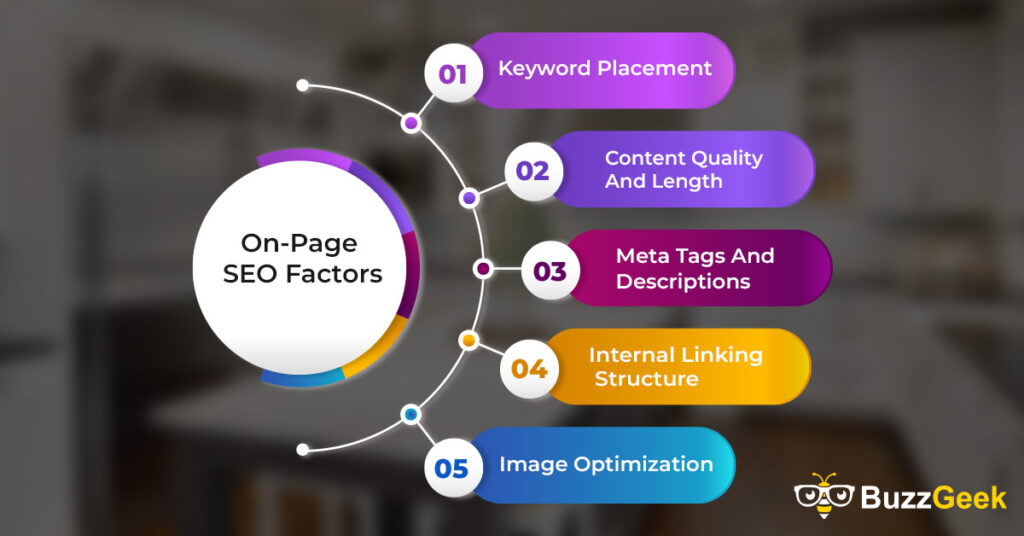
On-page SEO aims to improve your site’s content and structure, helping it rank higher in search engines. This includes using the right keywords, writing quality content, and optimizing each page. Let’s explore 5 key on-page SEO factors.
Keyword Placement
Placing keywords in the right spots helps search engines understand your page’s content. Use your main keyword in the title, first paragraph, and subheadings. Spread it naturally through the content without overstuffing. Use related keywords to give your page more depth. Proper placement boosts your visibility in search results.
Content Quality And Length
Quality content keeps visitors on your page. Write clearly to answer user questions. Ensure your content is long enough to cover the topic but easy to read. Long posts that offer real value rank higher. Avoid adding fluff just to increase length. Stay focused and provide helpful information.
Meta Tags And Descriptions
Meta tags and descriptions are short text pieces describing your page to search engines and users. The meta title appears as the page’s heading in search results. The meta description gives a quick summary of your page. Both should use your main keyword and encourage people to click through to your site.
Internal Linking Structure
Internal links connect your pages. They guide visitors to more content on your site and help search engines crawl your site better. Use links within your text to lead visitors to related articles.
A clear internal linking structure keeps users engaged. It also helps search engines index your pages faster.
Image Optimization
Optimizing images improves your page’s load speed and visibility. Use compressed image files to help your page load faster. Include alt text to describe each image, using your keywords where they make sense.
This allows search engines to understand your images. It can improve your rankings in image search results.
Off-Page SEO Considerations
Off-page SEO is vital. It boosts your site’s visibility and authority. It involves strategies outside your website to increase your search engine rankings. This type of SEO helps search engines know what people think of your product, service, or website.
Building Quality Backlinks
Backlinks are links from other websites to yours. They are vital for SEO because they signal to search engines that other websites find your content valuable. Focus on getting links from reputable, high-authority websites.
You can create shareable content, engage with communities, and partner with industry leaders. Remember, quality beats quantity when it comes to backlinks.
Social Media Engagement
Social media doesn’t directly impact SEO rankings but enhances your visibility and helps drive traffic to your site.
Use social media to share your content, engage with followers, and join conversations. This increases your content’s reach and can lead to more site visits. Regular activity on social media also helps build brand recognition and loyalty.
Guest Posting Opportunities
Guest posting involves writing articles for other websites in your industry. This strategy can help you reach a broader audience, establish authority, and gain valuable backlinks.
For guest posting, choose sites with high editorial standards. They should have a large, niche-aligned audience. Provide valuable content that offers insights and practical tips to their readers.
Brand Mentions And PR
Whether linked or unlinked, brand mentions can enhance your visibility and brand reputation. Use PR strategies to get your brand in news articles, podcasts, and other media. Effective PR boosts brand awareness and supports SEO. It shows your relevance in the industry.
Technical SEO Elements
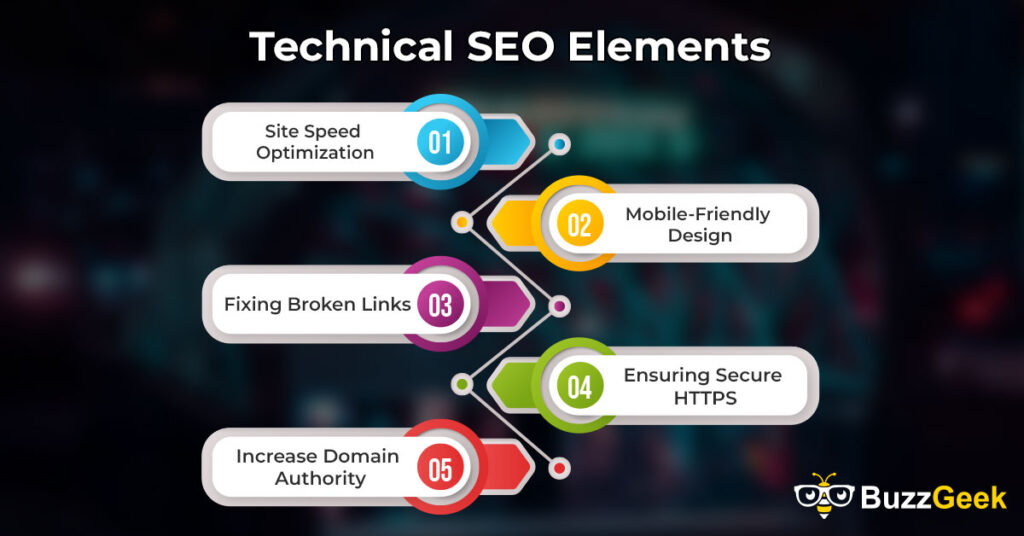
Technical SEO is vital. It ensures search engines can crawl, interpret, and index your site. This kind of SEO optimizes your site’s infrastructure. It should be fast, secure, and easy to navigate. Search engines consider these factors when ranking sites.
Site Speed Optimization
Speed is a vital aspect of your website’s user experience and SEO. A fast site keeps visitors, lowers bounce rates, and boosts engagement and conversion.
To optimize site speed, do these things: Compress and optimize images. Minify CSS, JavaScript, and HTML. Leverage browser caching. Choose a reliable web host. These steps will make your site load quickly, which will please users and search engines.
Mobile-Friendly Design
With mobile devices now driving most of the web traffic, a mobile-friendly website is essential. A mobile-friendly or responsive design makes your site adjust to different screen sizes. Use responsive web design.
It should have flexible grids, layouts, and resizable images. Use media queries to ensure usability on all devices. Also, make navigation simple and accessible on small screens. This will boost user engagement and satisfaction.
Fixing Broken Links
Broken links can significantly damage your website’s credibility and usability. They lead to poor user experiences and negatively impact your site’s SEO as they disrupt the flow of PageRank across your site.
Regularly audit your website to identify and fix broken links. Use tools like Screaming Frog SEO Spider or Google Search Console. They can find broken internal and external links. This helps you keep a clean, efficient navigation.
Ensuring Secure HTTPS
Security is a top priority for both users and search engines. HTTPS is a protocol used to provide security over the Internet. Google has confirmed that serving your website over HTTPS (instead of HTTP) is a ranking factor.
Obtain a Secure Sockets Layer (SSL) certificate to ensure your site uses HTTPS. This secures user data and boosts your site’s trust with visitors and search engines.
Increase Domain Authority
Domain Authority (DA) is a Moz metric. It predicts how well a website will rank on search engine result pages (SERPs). To raise your DA, improve your SEO.
You can do this by 1. producing high-quality content, 2. improving your internal linking, and 3. getting more backlinks from high-authority sites. To boost your domain authority, create valuable content and build links ethically. These are key strategies.
Local SEO
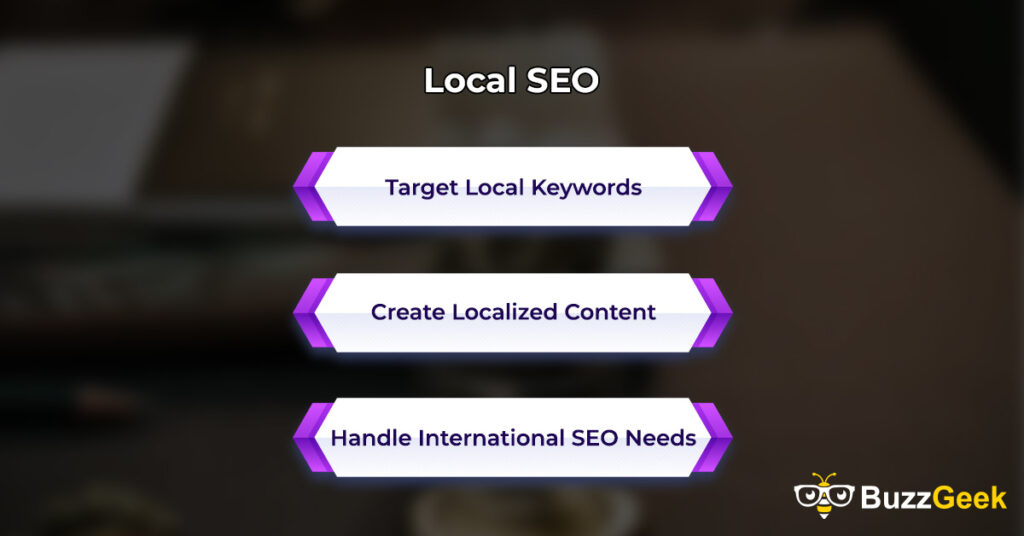
Local SEO helps businesses get found by people in their area. It focuses on making your website appear when someone searches for services or products near them. For success, balance local keywords, localized content, and international SEO needs.
Target Local Keywords
Targeting local keywords means using words or phrases that people in your area search for. Include the name of your city, neighborhood, or region in your keywords. For example, instead of “plumber,” use “plumber in Chicago.” This helps search engines determine your business’s location and connects you with local customers.
Create Localized Content
Creating localized content means writing about topics that are important to your area. Share local news, events, or guides that matter to your audience. Write blog posts or service pages that show your business is part of the community. This will improve your SEO and connect people in your area to your brand.
Handle International SEO Needs
When your business serves customers in different countries, you must handle international SEO. This involves creating content in other languages, setting up country-specific domains, and ensuring search engines show the right content to the right audience.
You need to balance local and international SEO strategies so that your website reaches everyone, no matter where they are.
Consistency In SEO
Consistency is a key factor in any successful SEO strategy. When you maintain regular efforts, search engines recognize your site as reliable. Consistent SEO in various areas helps to improve rankings. It builds trust and keeps traffic flowing to your website.
Regular Content Updates
Posting fresh content regularly keeps your website relevant. Search engines prioritize websites that update content frequently.
Adding new blog posts, updating old pages, or refreshing old content shows search engines your site is active. Regular updates also give users new information, which keeps them engaged and coming back.
Adapt To Algorithm Changes
Search engines change their algorithms often, and these updates impact how websites rank. To stay on top, you need to adapt to these changes quickly. Keep track of major updates and adjust your strategy as needed. This may include revising content, optimizing technical elements, or improving user experience.
Maintain Consistent Branding
Consistency in branding is essential for SEO. Your website, social media, and other platforms should reflect the same tone and message.
Consistent branding builds trust with your audience and signals to search engines that your business is reliable. Use the same colors, logos, and voice across all platforms to create a seamless user experience.
Stay Flexible With Trends
SEO trends change often. What works today may not work tomorrow. Staying flexible and willing to change your strategy when new trends emerge is important. Watch for industry changes and experiment with new techniques like voice search and video content. This will keep your SEO strategy fresh and competitive.
FAQs
How Do I Balance Organic SEO With Paid Search Efforts (PPC)?
Balancing organic SEO with paid search efforts (PPC) involves optimizing for long-term growth and immediate visibility. Focus on organic SEO for sustainable traffic while using PPC for targeted, quick results. Analyze data regularly to refine both strategies and ensure synergy between them.
How Do I Balance SEO For Ranking Vs. Conversion Optimization?
Balancing SEO for ranking vs. conversion optimization requires focusing on both. Prioritize SEO techniques like keyword optimization and site speed for rankings while using persuasive CTAs and user experience improvements to boost conversions. The key is to align both for long-term success.
How Do I Balance Optimizing For Google Vs. Other Search Engines (E.G., Bing)?
To balance optimizing for Google and other search engines, like Bing, you must understand their algorithm differences. Google focuses on mobile-first indexing, page speed, and quality content. For Bing, emphasize keyword relevance and use multimedia. Tailor efforts to each platform’s strengths.
How Do I Balance Structured Data With The Rest Of My SEO Strategy?
Balancing structured data with the rest of your SEO strategy involves integrating schema markup without overshadowing other SEO elements. Ensure your content, keywords, and user experience are strong. Structured data complements these by enhancing search visibility and rich result opportunities.
Conclusion
Balancing SEO is like maintaining a healthy diet for your website. You need the right mix of content, links, and tech; it must all work smoothly. Focus on creating helpful content that matches what people are searching for.
Make sure your site runs fast and is easy to use on phones. Build links from trusted sources to boost your site’s credibility.
Stay consistent and monitor changes in search engines. The right balance will boost your SEO, raise your rankings, and attract more visitors. SEO is a team effort, so pay attention to the details. Improve over time for long-term success.