Websites often need to organize their content. Subdomains are one way to do this. A subdomain is a part of a main website but works as its own section. For example, store.example.com is a subdomain of example.com. This brings up an important question: How do subdomains affect SEO?
Subdomains affect SEO by splitting authority from the main domain. Search engines see subdomains as separate websites. This means each subdomain needs its own SEO work. Subdomains can impact keyword rankings, link building, and indexing. However, they can make SEO harder to manage if not used carefully.
In this guide, we’ll explore the pros and cons of subdomains for SEO. We’ll discuss their benefits, drawbacks, and best practices.
Key Takeaways
- Divided SEO Efforts: Subdomains split authority, needing separate SEO strategies for rankings, keywords, and backlinks.
- Search Engine Impact: Google treats subdomains as separate sites, affecting indexing, rankings, and overall performance.
- Content Management: Subdomains organize content well but may dilute domain authority and complicate SEO management.
What Is A Subdomain?
A subdomain is a part of a website. It is placed before the main domain name. For example, in store.example.com, “store” is the subdomain. Subdomains help organize a website into sections. They are used for blogs, online stores, or customer support pages. Each subdomain acts like a separate website.
It has its own content and structure. A subdomain is different from a subfolder. Search engines treat subdomains as separate websites, even if they belong to the same domain.
How Subdomains Affect SEO
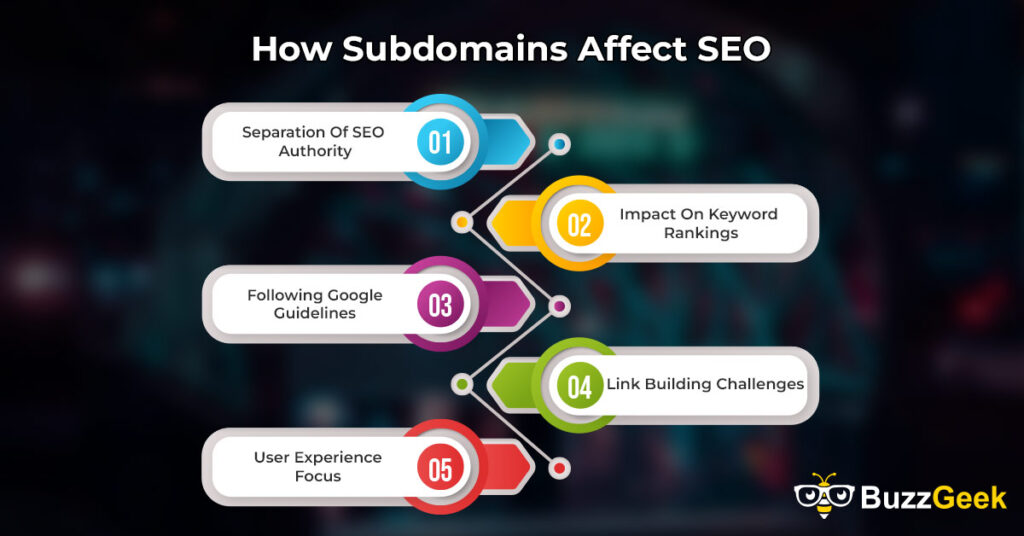
Subdomains affect how search engines view and rank your website. Search engines treat subdomains as separate websites. This means subdomains do not automatically share authority with the main domain. Each subdomain needs its own SEO work. When not optimized, subdomains can lower your website’s overall performance. Businesses need to carefully plan when to use subdomains. Here are key ways subdomains impact SEO.
Separation Of SEO Authority
Subdomains and main domains have separate SEO authority. Search engines treat them as different websites. For example, if your main domain is example.com and your subdomain is blog.example.com, each will have its own rankings.
Links to your subdomain do not help your main domain. This means you must work harder to improve SEO for both. Businesses with multiple subdomains may struggle to manage SEO effectively.
Impact On Keyword Rankings
Keywords on a subdomain do not boost the main domain’s rankings. For example, if blog.example.com ranks for a keyword, example.com does not automatically rank for it. This can divide search traffic between the subdomain and the main site.
Businesses need to choose separate keywords for each. This ensures subdomains and main domains do not compete for the same rankings.
Indexing By Search Engines
Search engines index subdomains separately. Each subdomain must be submitted and optimized individually. For example, if you have store.example.com, you need to make sure it is indexed correctly.
When search engines fail to index the subdomain, it will not appear in search results. Proper indexing helps users find the subdomain’s content. Neglecting indexing can hurt your visibility.
Link Building Challenges
Building links for subdomains is harder. Links to a subdomain do not improve the authority of the main domain. For example, if blog.example.com gets 100 links, they do not help example.com.
You need to build links for each subdomain separately. This doubles the effort for businesses with multiple subdomains. Link-building for subdomains requires careful planning.
Effect On Domain Authority
Domain authority measures the strength of a website. Subdomains and main domains have separate domain authority scores. For example, a high domain authority for store.example.com does not improve example.com.
This limits how much a subdomain can help the main domain. To build strong authority, businesses must focus on both the main domain and subdomains. This takes extra time and effort.
When Should You Use A Subdomain On Your Website?

Subdomains can help in specific cases. They work well for organizing large websites. Subdomains let you separate parts of your site without affecting the main domain. Here are reasons to use a subdomain with examples.
Detach From Your Main Site
Use a subdomain when you want a section to work independently. For example, a business may use store.example.com for an online shop. The store is separate from the main website, which may focus on company information. This separation helps manage each section easily.
Improve Organization
Subdomains help organize content that does not fit with the main site. For example, a school might use courses.school.com for classes and events.school.com for upcoming activities. Each subdomain keeps the information clear and easy to find. This makes the website more user-friendly.
To Separate Sites By Language
Subdomains are useful for multilingual websites. For example, a global company might use en.example.com for English and fr.example.com for French. Each subdomain is customized for the specific language. This improves the user experience and makes it easier to rank in local search engines.
Different Target Audiences
When your website serves different audiences, subdomains can help. For example, students.example.com can focus on students, while parents.example.com targets parents. Each subdomain can have its own content and design to meet the needs of its audience. This ensures a better experience for all users.
Large Websites With Separate Functions
Large websites with many features often use subdomains. For example, a company may use support.example.com for customer help and blog.example.com for articles. Each subdomain has a clear purpose. This makes the website easier to navigate.
Heavy Traffic Or Performance Needs
Subdomains can handle heavy traffic better. For example, if a company runs a busy online store, they can use shop.example.com. This prevents the store’s traffic from slowing down the main website. Subdomains can also use separate hosting to improve performance. This is helpful for large or high-traffic websites.
When Should You Not Use A Subdomain?
Subdomains are not always the best choice. In some cases, they can create more problems than solutions. Here are situations where you should avoid using subdomains with clear examples.
SEO Fragmentation
Subdomains divide SEO authority. For example, if you use blog.example.com for a blog, its SEO efforts do not help the main domain, example.com. This means you must build SEO for each separately.
When your goal is to improve the main domain’s ranking, avoid subdomains. Use subfolders like example.com/blog instead. This keeps all SEO efforts under one domain.
Brand Consistency
Subdomains can confuse users about your brand. For example, if your main website is example.com but your store is shop.example.com, customers may think it is a different company.
This can harm trust and brand recognition. Using subfolders like example.com/shop keeps your brand consistent. Avoid subdomains if maintaining a unified brand is important.
Management Complexity
Managing subdomains is more complex than subfolders. Each subdomain needs separate hosting, updates, and SEO work. For example, maintaining blog.example.com and store.example.com requires more time and resources than keeping everything under example.com. Small businesses with limited resources should avoid subdomains to simplify management.
When You Don’t Need To Isolate Content
When content does not need to be separate, avoid subdomains. For example, a blog that supports your main site can be part of example.com instead of blog.example.com.
Using a subfolder like example.com/blog helps the main site rank better in search engines. Subdomains should only be used when content needs to function independently.
What Are The SEO Benefits Of Using A Subdomain?

Subdomains can provide several SEO advantages. They are helpful when you need to organize or separate specific content. Here are the benefits of using subdomains with examples.
Better On-Site Experience
Subdomains improve user experience by organizing content. For example, a company may use support.example.com for customer help. This makes it easier for visitors to find what they need. Separating content into subdomains ensures users are not overwhelmed by unrelated information. A better experience can keep users on your site longer.
Targets International Markets
Subdomains are great for targeting global audiences. For example, us.example.com can focus on users in the United States, while uk.example.com can target the UK.
Each subdomain can have content, language, and currency specific to the market. This improves local SEO and user satisfaction. It also helps rank better in different regions.
Inserts Keywords Into Your URL
Subdomains allow you to include keywords in your URL. For example, blog.example.com highlights the blog section. This can improve search engine rankings for the keyword “blog.” Including keywords in subdomains helps search engines understand the purpose of the page. It also makes the URL more descriptive for users.
Helps To Grow Authority In Niche Markets
Subdomains let you focus on specific topics or audiences. For example, fitness.example.com can focus on fitness content. This allows you to target a niche market and build authority in that area.
Over time, this can boost your visibility for niche-related keywords. Subdomains make it easier to create specialized content for different audiences.
Boosts Site Domain Authority
A strong-performing subdomain can improve the overall reputation of your domain. For example, if blog.example.com gains many backlinks and high traffic, it can reflect positively on example.com. Subdomains help build authority for specific sections without affecting the rest of the site. This can improve the credibility of the entire domain.
You Can Create Mobile-Friendly Subdomains
Subdomains can be used to create mobile-friendly sites. For example, m.example.com is often used for mobile versions of websites. This ensures that mobile users have a smooth browsing experience. A mobile subdomain can also rank better in mobile search results. It helps websites meet the needs of users on different devices.
What Are The SEO Drawbacks Of Using A Subdomain?
Using subdomains has some disadvantages for SEO. They can make it harder to rank in search engines if not managed properly. Here are the main SEO drawbacks with examples.
Subdomains Can Dilute Your SEO
Subdomains split SEO efforts between the main domain and the subdomain. For example, if you have blog.example.com and example.com, each needs separate SEO work. Links to the subdomain do not help the main domain’s ranking.
This can dilute your SEO efforts. When your goal is to rank higher overall, it is better to use subfolders like example.com/blog to combine efforts.
They Won’t Help With Internal Linking
Links between a subdomain and the main domain are treated like external links. For example, a link from shop.example.com to example.com does not carry the same SEO benefits as an internal link within the same domain.
This limits how much your pages can help each other rank better. Using subfolders like example.com/shop ensures internal links share SEO benefits.
A Little More Difficult For Google To Crawl
Google treats subdomains as separate websites. This means it needs to crawl and index each subdomain individually. For example, if you have blog.example.com, Google needs to crawl it separately from example.com.
When you do not set up proper sitemaps or submit the subdomain to search engines, it might not get indexed quickly. This makes subdomains harder to manage compared to subfolders.
Common Mistakes With Subdomains

Using subdomains can cause problems if not done correctly. Many businesses make mistakes that hurt their SEO. Here are common mistakes and how they impact websites.
Creating Unnecessary Subdomains
Some websites create too many subdomains without a clear purpose. For example, if you have shop.example.com, blog.example.com, and events.example.com, it may confuse users and dilute SEO.
Only create subdomains when needed. Too many subdomains divide your authority and make SEO harder to manage.
Duplicate Content Issues
Duplicate content can happen when the same information is on the main domain and subdomain. For example, if example.com/help and help.example.com show the same pages, search engines may penalize you. This can lower your rankings. Always use unique content for each subdomain to avoid duplicate content problems.
Lack Of Internal Linking
Subdomains often lack proper internal linking to the main site. For example, if blog.example.com does not link back to example.com, it misses the chance to share authority and traffic. Internal linking helps users navigate and improves SEO. Always include links between your main domain and subdomains.
Poor Subdomain Management
Subdomains need regular updates and maintenance. For example, if you create support.example.com but do not update it, users may find outdated information. Poor management can hurt your credibility and user experience. Regularly monitor and update all subdomains to keep them relevant and functional.
Ignoring SEO Data For Subdomains
Many businesses do not track SEO data for subdomains. For example, if store.example.com has 10,000 monthly visitors, ignoring this data means you miss insights. Use tools like Google Analytics to monitor each subdomain. This helps identify issues and improve performance. Ignoring data can result in lost traffic and rankings.
FAQs
Are Subdomains Bad For SEO?
Subdomains are not bad for SEO, but they need more work. Google treats subdomains as separate websites. This means you must optimize each subdomain individually. When not managed properly, subdomains can divide your SEO efforts. Use subdomains only when content needs to be separate, like a blog or store.
Does Google Index And Rank Subdomains?
Yes, Google indexes and ranks subdomains. Each subdomain is treated as a separate website. For example, blog.example.com is ranked separately from example.com. You need to optimize subdomains for search engines. Submitting subdomains in Google Search Console ensures proper indexing and ranking.
How Does Core Web Vitals Impact Subdomains?
Core Web Vitals measure speed and user experience. Each subdomain is evaluated separately. For example, if shop.example.com loads slowly it will rank lower. Good Core Web Vitals, like fast loading times, improve rankings. Use tools like Google PageSpeed Insights to check each subdomain’s performance.
Is It Better To Use Subdomains Or Subdirectories For SEO?
Subdirectories are better for SEO in most cases. They share authority with the main domain. For example, example.com/blog helps the main domain rank higher. Subdomains, like blog.example.com, do not share SEO authority. Use subdomains only if you need to separate content, like for a different region or purpose.
How Do I Monitor The SEO Performance Of Subdomains?
Use tools like Google Analytics to track subdomains. Add each subdomain as a separate property. Check traffic, bounce rate, and keyword rankings. For example, monitor how many visitors blog.example.com gets each month. Analyzing this data helps you improve the subdomain’s performance.
Conclusion
Subdomains can be useful for organizing content and targeting specific audiences. However, they also come with challenges like dividing SEO authority and requiring separate optimization. Use subdomains only when necessary, and ensure they are well-managed. By understanding their impact on SEO, you can make informed decisions to benefit your website’s performance.