Websites are more than just pages with information. They are tools that connect businesses with their audience. To succeed, websites need to provide a great experience for users. However, how user experience affect SEO?
User experience (UX) directly affects SEO. A website with fast loading times, clear navigation, and mobile-friendly design improves user engagement. Search engines, like Google, reward user-friendly sites with better rankings. Improving UX boosts traffic, reduces bounce rates, and helps websites rank higher.
In this guide, we’ll explore the connection between UX and SEO. We’ll also discuss the key UX factors, their impact on rankings, and actionable steps to improve your website.
Key Takeaways
- Better Rankings: User-friendly websites lower bounce rates and boost user engagement.
- Faster Performance: Fast-loading, mobile-friendly pages improve SEO and rankings.
- Search Priority: Clear navigation and quality content help search engines rank your site higher.
What Is User Experience (UX)?
User experience (UX) refers to how people interact with a website or product. It includes how easy it is to use and how pleasant it feels. UX focuses on making things simple for users. A good UX helps visitors complete tasks quickly. A website with clear menus allows users to find information in 2-3 clicks.
Key parts of UX include fast loading times, mobile-friendly design, and clear navigation. Research shows that websites with a good UX increase user satisfaction by 88%. A smooth UX leads to better engagement and higher website success.
How User Experience Affects SEO
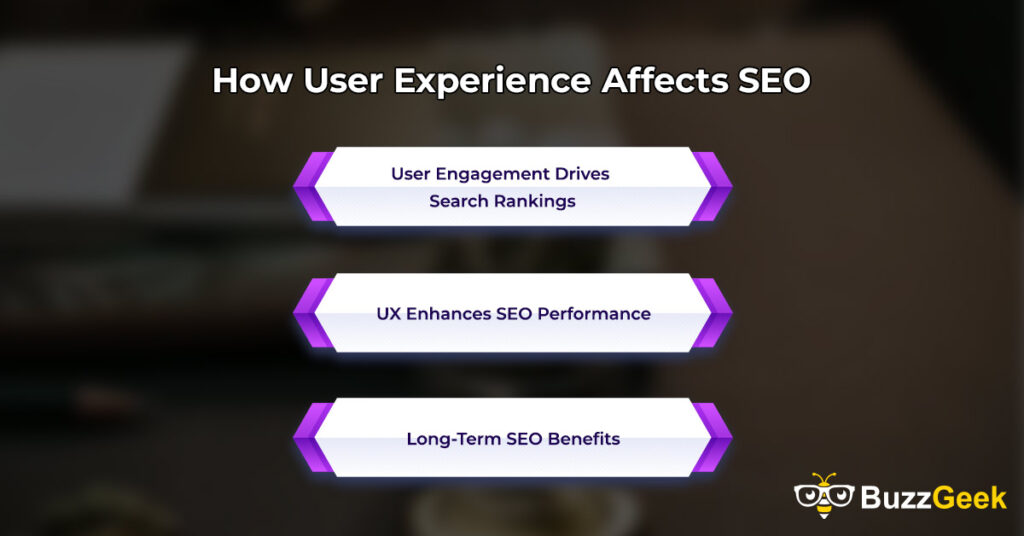
User experience (UX) plays a key role in how well a website ranks on search engines. Search engines, like Google, want to show users the best results. Websites with good UX are easier to use and keep people on the site longer. This helps search engines see the site as valuable. A well-designed site with clear content and fast loading times improves both user satisfaction and search rankings. UX and SEO work together to improve website performance.
User Engagement Drives Search Rankings
User engagement directly impacts search engine rankings. When users stay longer on a website, it signals quality to search engines like Google. A website with clear content and fast loading times keeps users engaged.
For example, a page that loads in 1 second sees 30% higher engagement than one that loads in 5 seconds. High engagement lowers bounce rates and boosts rankings. Research shows sites with better engagement have 2x higher chances of ranking on the first page.
UX Enhances SEO Performance
A great UX improves overall SEO performance. Search engines prioritize websites that offer a smooth and user-friendly experience. Mobile-friendly sites rank better because 60% of searches come from mobile devices.
Clear navigation helps users find information faster, improving site credibility. For example, a website with clear menus reduces search time by 50%. When users find what they need easily, it improves rankings and attracts more organic traffic.
Long-Term SEO Benefits
Good UX provides lasting SEO benefits. Websites with excellent UX keep users coming back, increasing repeat visits by 32%. Search engines reward websites with consistent traffic and low bounce rates.
For example, a fast-loading website can improve organic traffic by 25% over time. UX improvements like faster speeds, responsive design, and quality content create long-term value. These changes ensure better rankings and steady growth in search visibility.
Importance Of UX For SEO
User experience (UX) is very important for SEO. A website with good UX keeps users happy and engaged. Search engines notice when people spend more time on a site. They reward these sites with higher rankings. UX includes things like fast loading times, clear menus, and useful content. When users find what they need easily, they are more likely to stay and return. A better UX not only improves rankings but also helps websites grow and succeed over time.
Impact On User Engagement Metrics
Good UX improves user engagement metrics like bounce rate, time on site, and pages per session. A site with a bounce rate under 40% performs better in search rankings. For example, a page that loads in under 2 seconds keeps 53% more visitors.
Fast loading speeds and simple navigation encourage users to explore more pages. Higher engagement sends positive signals to search engines, improving rankings. These metrics show how user behavior affects website visibility.
Providing Quality Content
Quality content is a key part of UX. Users stay longer on sites that provide clear and useful information. For example, a blog with organized sections and easy-to-read text keeps readers engaged.
Content that answers questions directly improves user satisfaction. Search engines rank pages higher when they meet user needs. Providing accurate and helpful content increases traffic. Research shows that quality content boosts organic search traffic by 40% or more.
Increased Conversions
Good UX leads to higher conversions. Clear layouts and simple forms make it easy for users to take action. For example, a site with a one-step checkout process increases sales by 35%. Fast-loading product pages also boost purchases.
When users can quickly find what they need, they are more likely to buy. Improved UX helps websites turn visitors into customers, leading to long-term SEO benefits through better engagement and more traffic.
Crucial UX Factors That Boost SEO
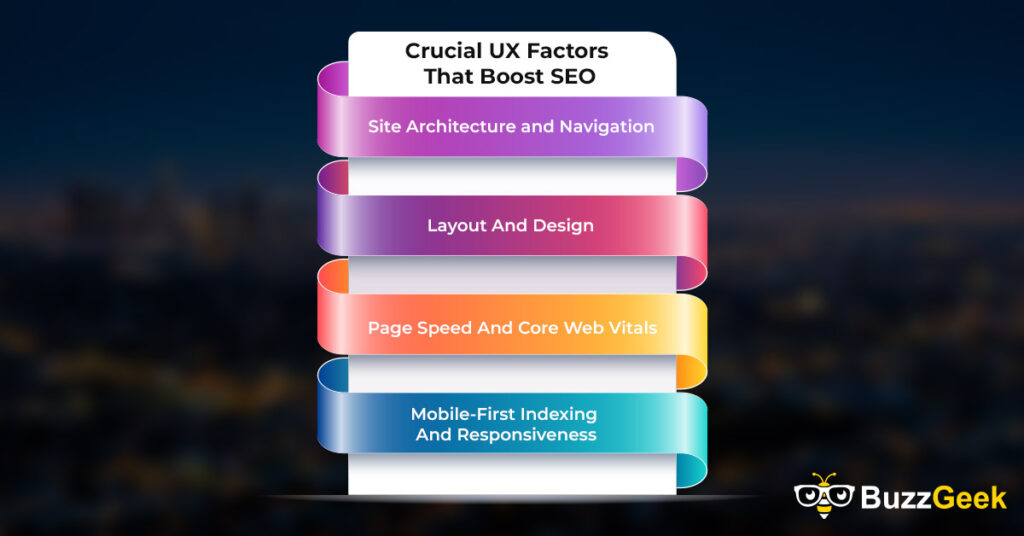
Several UX factors directly improve SEO. Search engines prefer websites that are easy to use and offer a smooth experience. Factors like fast loading pages, clear layouts, and mobile-friendly designs help users stay longer. When users find a site helpful, search engines rank it higher. These UX elements also reduce bounce rates and improve engagement. A website with strong UX performs better in search results. Each factor works together to boost rankings and user satisfaction.
Site Architecture and Navigation
Clear site architecture helps users and search engines find information. A website with a simple structure allows users to reach their goals in 2-3 clicks. For example, adding a “Home,” “About,” and “Contact” page improves navigation.
Search engines rank sites with well-organized links higher. Breadcrumbs also help users understand their location on the site. Good navigation reduces bounce rates by 20%, improving SEO. Clear and simple navigation benefits both users and rankings.
Layout And Design
A clean and user-friendly design keeps visitors on the site longer. Simple layouts with plenty of white space make content easy to read. For instance, a webpage with clear headings increases readability by 50%.
Buttons and links should be easy to find and use. A clutter-free design makes the website look professional and trustworthy. Websites with good design see higher engagement, which search engines value when determining rankings.
Page Speed And Core Web Vitals
Page speed is critical for user satisfaction and SEO. Slow pages lead to higher bounce rates. For example, a site that loads in 1 second has 2x the retention rate of one that takes 5 seconds.
Core Web Vitals measure speed, responsiveness, and visual stability. Google prioritizes sites that perform well in these areas. Improving page speed can boost rankings and increase user satisfaction. Faster websites keep visitors engaged and improve conversions.
Mobile-First Indexing And Responsiveness
Most users access websites on mobile devices. Google uses mobile-first indexing, meaning it checks the mobile version of a site for rankings. A responsive design adapts to different screen sizes, improving usability.
For example, mobile-friendly sites see 70% more traffic than non-responsive ones. Text, images, and buttons should work well on small screens. A mobile-friendly site keeps users engaged and improves SEO. Responsiveness is now essential for ranking well.
Key UX Elements Affecting SEO
Key UX elements have a big impact on SEO. They help users stay on the website longer and find information easily. Search engines look for sites that provide a great experience. Simple navigation and attractive visuals make a site user-friendly. When users enjoy their visit, it improves metrics like bounce rate and session time. These factors help search engines rank the site higher. Improving these elements creates a better experience for both users and search engines.
Ease Of Navigation
Navigation is one of the most important parts of UX. It helps users find what they need quickly. A website with clear menus and simple links improves the user experience. For example, a site where users can reach any page in 2-3 clicks has better engagement.
Breadcrumb navigation also helps users see their location on the site. Search engines rank websites with easy navigation higher. Poor navigation confuses users and increases bounce rates, which lowers rankings.
Visual Appeal
A visually appealing website attracts and keeps users. Clean layouts, clear fonts, and good color contrast make content easier to read. For example, websites with organized sections and images see 50% longer visit times.
Visual clutter makes users leave quickly, which hurts rankings. Adding high-quality images and videos improves engagement. Research shows that sites with good visual appeal have 38% lower bounce rates. A well-designed website boosts both user satisfaction and SEO performance.
Behavioral Factors And Their Impact On Ranking
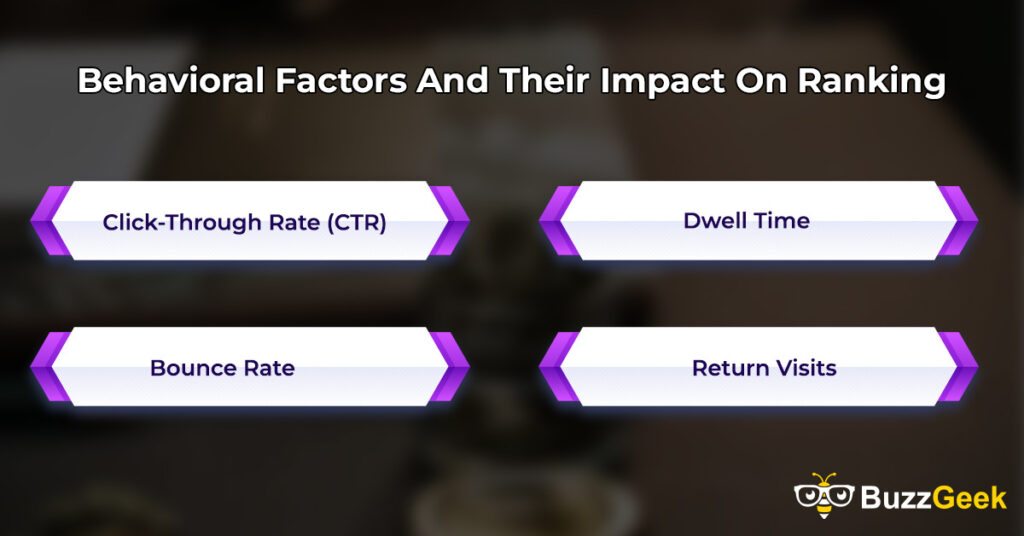
Behavioral factors show how users interact with a website. Search engines use these factors to decide rankings. Metrics like click-through rate, dwell time, bounce rate, and return visits are very important. They tell search engines if a website is helpful and engaging. Focusing on user behavior creates better results for both users and search engines.
Click-Through Rate (CTR)
Click-through rate (CTR) measures how many people click on a link in search results. A high CTR shows that users find the link useful. For example, a page with a clear title and description gets 30% more clicks.
Google and other search engines rank pages with high CTRs better. Adding keywords in titles and meta descriptions improves CTR. Research shows that a 1% increase in CTR can boost rankings significantly.
Dwell Time
Dwell time is the time users spend on a page after clicking a search result. Longer dwell times show that users find the content helpful. For example, a page with clear and detailed content increases dwell time by 40%.
Search engines use this metric to judge content quality. If users leave quickly, it can lower rankings. Improving page speed and providing valuable content helps increase dwell time.
Bounce Rate
Bounce rate measures how many visitors leave a site after viewing just one page. A high bounce rate can harm rankings. For instance, pages with confusing layouts or slow loading times have higher bounce rates.
A bounce rate under 40% is considered good. Clear navigation, fast loading times, and relevant content reduce bounce rates. Websites with low bounce rates perform better in search engine rankings.
Return Visits
Return visits show that users trust and value a website. A site with 30% or more return visitors is seen as reliable by search engines. For example, adding fresh and engaging content encourages users to come back.
Websites that update content regularly see a 60% increase in return visits. Return visitors also spend more time on the site, improving other engagement metrics. Search engines reward sites with loyal and returning audiences.
Best Practices For Improving UX For SEO

Improving UX is essential for better SEO. Small changes can make a big difference in how users interact with your website. Start by analyzing your site’s performance to find weak areas. Use tools to identify problems and test changes regularly. Focus on making pages load faster, improving mobile usability, and creating simple navigation. When users enjoy the site, search engines rank it higher. Better UX leads to long-term SEO success.
Analyzing Current UX
Start by checking how users interact with your website. Use data to find problem areas. For example, pages with high bounce rates may need better content. Analyze metrics like click-through rates, dwell time, and user behavior.
Tools like Google Analytics can show which parts of your site perform well and which need improvement. A detailed analysis helps you understand what users need and how to fix issues that hurt SEO.
Using Tools
Use tools to improve UX and SEO. Google Search Console shows issues like broken links and slow loading pages. Heatmap tools like Hotjar show where users click and scroll. Tools like PageSpeed Insights help measure and improve loading times.
These tools give clear data to make informed decisions. For example, fixing errors found by Google Search Console can improve site rankings by up to 20%. Tools are essential for improving UX and SEO together.
Testing And Iteration
Testing changes improve UX and SEO over time. Use A/B testing to compare two versions of a page. For example, test two different button designs to see which gets more clicks. Gather feedback from users and make updates. Repeat the process to keep improving.
Regular testing ensures your website stays user-friendly and performs well in search rankings. Iteration makes the site better step by step.
Enhancing Page Load Speed
Faster page load times improve UX and SEO. A page that loads in under 2 seconds keeps 53% more visitors than slower pages. Compress images and use caching to make your site faster.
Test speed with tools like GTmetrix or PageSpeed Insights. Improving load speed also boosts Core Web Vitals, which Google uses to rank sites. Fast-loading pages keep users engaged and help rankings.
Improving Mobile UX
Mobile UX is critical because 60% of searches happen on mobile devices. A responsive design makes your site look good on all screen sizes. Check buttons and text to ensure they are easy to use on mobile.
Mobile-friendly sites get 70% more traffic than non-responsive ones. Test your site with Google’s Mobile-Friendly Test tool. A good mobile experience keeps users happy and improves rankings.
Simplifying Navigation
Simple navigation helps users find information quickly. Use clear menus, links, and headings. For example, a navigation bar with 4-6 main categories improves usability. Add breadcrumbs to help users know their location on the site.
Clear navigation reduces bounce rates and increases engagement. Search engines reward websites that are easy to use. Improving navigation makes your site better for both users and search engines.
FAQs
Is User Experience A Google Ranking Factor?
Yes, user experience is a Google ranking factor. Metrics like page speed, mobile-friendliness, and bounce rate affect rankings. Websites with good UX are rewarded with higher positions in search results. Google values user-friendly designs that keep visitors engaged and improve their browsing experience.
Can Poor User Experience Hurt Your SEO Rankings?
Yes, poor user experience can harm your SEO rankings. Slow loading times, confusing navigation, and high bounce rates signal to Google that users are unhappy. This lowers your site’s ranking. Websites with poor UX see reduced engagement and traffic. Improving UX is essential to improve SEO performance.
How Do Broken Links Affect User Experience And SEO?
Broken links harm user experience by frustrating visitors who cannot access the content they need. This increases bounce rates and lowers trust. For SEO, search engines view broken links as a sign of poor site quality. Fixing or removing broken links improves both user satisfaction and search engine rankings.
How Does Internal Linking Affect UX And SEO?
Internal linking improves UX by helping users navigate your site and find related content. For SEO, it helps search engines understand your site structure and boosts rankings for key pages. Clear and relevant internal links keep users engaged, reducing bounce rates and increasing time spent on the site.
Does The Use Of Multimedia (Images, Videos) Impact SEO?
Yes, multimedia impacts SEO positively. High-quality images and videos improve user engagement and keep visitors on your site longer. They enhance UX by making content more engaging and easier to understand. Optimized multimedia with proper alt text and fast loading improves your rankings and traffic.
Conclusion
User experience (UX) is a key factor in SEO success. A website with clear navigation, fast loading speeds, and mobile-friendly design not only keeps users happy but also ranks higher in search results. By focusing on improving UX, you can boost engagement, lower bounce rates, and achieve long-term SEO benefits. A better user experience leads to better rankings and more traffic.