In the world of search engine optimization (SEO), various techniques are used to improve website rankings. Some of these methods are considered ethical, while others break the rules. One such questionable method is called Cloaking SEO. So, what is cloaking SEO?
Cloaking SEO is a technique where a website shows different content to search engines than to users. This method is used to trick search engines into ranking the site higher. Cloaking is against search engine rules and can lead to penalties, such as lower rankings or being banned from search results.
In this guide, we’ll explore what cloaking SEO is, why it is used, the types of cloaking, and the serious risks involved. We’ll also discuss how search engines detect cloaking and the importance of following ethical SEO practices.
Key Takeaways
- Deceptive SEO Technique: Cloaking shows different content to search engines than what users actually see to manipulate rankings.
- Violates Search Engine Rules: It’s a black hat method that breaches search engine guidelines, risking penalties or bans.
- Long-Term Impact: Cloaking can harm your site’s credibility, leading to decreased traffic and damaged reputation.
What Is Cloaking SEO?
Cloaking SEO is a technique used in search engine optimization. It involves showing different content to search engines and users. When search engines crawl a website, they see one version. When a user visits that page they see something different. It tricks search engines into ranking a website higher.
What Is Cloaking SEO Used For?
Cloaking SEO is used to manipulate search engine rankings. The goal is to rank higher in search results. Some websites use cloaking to hide spammy content. Others use it to avoid search engine penalties while still targeting specific keywords. For example, a website may show a clean, simple page to Google.
However, it shows users a page filled with ads or unrelated content. Cloaking can also be used to deliver different content based on location or device. However, this is still against search engine rules. Using cloaking can lead to severe consequences, including bans from search engines.
Types Of Cloaking In SEO

Cloaking in SEO can take many forms. Each type involves showing different content to search engines and users. The goal is always to improve search rankings by tricking the search engine. Here are some common types of cloaking used in SEO.
Content Cloaking
Content cloaking happens when a website shows different text to search engines and users. For example, the website might show a page full of keywords to search engines.
However, it shows normal text to users. The purpose is to rank higher for certain keywords. This type of cloaking is easy for search engines to detect. When detected, the website can face penalties.
Keyword Cloaking
Keyword cloaking is when a website hides specific keywords from users but shows them to search engines. This might be done by placing keywords in hidden text or code.
The goal is to rank higher for those keywords without affecting the user experience. For example, a page might have white text on a white background filled with keywords. This type of cloaking is considered deceptive.
Image Cloaking
Image cloaking involves showing different images to search engines and users. The website might show a simple image to users but a different, keyword-optimized image to search engines.
This is done to rank higher in image search results. For example, an image might have hidden text in the file name or alt text that is only shown to search engines. Image cloaking can lead to penalties if discovered.
URL Cloaking
URL cloaking happens when a website shows a different URL to search engines than it does to users. The goal is to trick the search engine into thinking the site is something it’s not. For example, a website might show a clean URL to search engines but redirect users to a completely different page. This is often used to hide the true nature of a website.
HTML Cloaking
HTML cloaking involves hiding parts of the HTML code from users but showing it to search engines. This might include hiding text, links, or other elements in the HTML code. For example, a website might use hidden HTML to show search engines a page full of keywords. Users won’t see this hidden content, but the search engine will. HTML cloaking is against search engine guidelines.
IP Cloaking
IP cloaking is when a website shows different content based on the IP address of the visitor. For example, the website might show one version of the site to search engines and another version to users.
This is done by detecting the IP address of the visitor and delivering different content accordingly. IP cloaking is often used to target search engines specifically, making it a common but risky technique.
How Cloaking SEO Works
Cloaking SEO works by showing different content to search engines and users. This is done using various methods. The website detects who is visiting the page. Then, it decides what content to show. When the visitor is a search engine, it shows one version. When the visitor is a regular user, it shows another version. This way, the website tries to rank higher in search results while keeping users happy with different content.
Different User Views
In cloaking, different users see different content. A search engine might see a page full of keywords. But a regular user sees a simple, readable page. This trick helps the website rank higher in search results.
For example, the website might show a search engine a page with 100 keywords. However, it shows users a page with just 10 keywords. This method is used to boost search engine rankings while keeping the page user-friendly.
IP-Based Cloaking
IP-based cloaking works by detecting the IP address of the visitor. An IP address is a unique number that identifies each device on the internet. The website checks if the visitor’s IP address belongs to a search engine or a regular user.
When it’s a search engine, the website shows one version of the content. When it’s a regular user, it shows another version. This method is commonly used to hide content from search engines.
User-Agent Cloaking
User-Agent cloaking works by detecting the user agent of the visitor. A user agent is a string of text that tells the website what type of browser or device is being used. The website checks if the user agent belongs to a search engine or a regular user.
When it’s a search engine, the website shows different content. For example, it may show a search engine a page full of keywords but show a regular user a simple page.
HTTP Referrer Cloaking
HTTP referrer cloaking uses the HTTP referrer header to decide what content to show. The referrer header tells the website where the visitor came from. When the visitor comes from a search engine, the website may show one version of the page.
When the visitor came from another website, it may show a different version. This method is used to trick search engines into thinking the page is more relevant than it really is.
JavaScript Cloaking
JavaScript cloaking uses JavaScript to show different content to search engines and users. JavaScript is a type of code that runs in the browser. The website uses JavaScript to detect if the visitor is a search engine or a regular user.
When it’s a search engine, the website might hide certain content. When it’s a regular user, it shows everything. This method is tricky because search engines are getting better at detecting JavaScript cloaking.
Reasons For Cloaking SEO
There are many reasons why websites use cloaking SEO. The main goal is to trick search engines. Websites want to rank higher in search results. They do this by showing different content to search engines and users. Cloaking can give websites an unfair advantage. Here are some common reasons why websites use cloaking.
Boosting Rankings
Websites use cloaking to boost their search engine rankings. By showing search engines content filled with keywords, they try to rank higher. For example, a website might show a page with 100 keywords to a search engine but only 10 to users.
This gives the impression that the page is highly relevant to the search engine. The goal is to appear at the top of search results. This helps the website get more traffic.
Hiding Content
Some websites use cloaking to hide content from search engines. This could include content that might get the site penalized. For example, a site with inappropriate or low-quality content might use cloaking to hide it.
The search engine sees one version, while users see the hidden content. This helps the website avoid penalties or bans while still providing the hidden content to users. However, this method is risky and can lead to severe penalties.
Manipulating Search Engines
Cloaking is often used to manipulate search engines. Websites try to trick search engines into thinking they are more relevant than they really are. For example, a website might be cloaked to show a search engine a page full of popular keywords.
This can help the website rank higher in search results, even if the content is not very useful to users. Manipulating search engines in this way is considered deceptive and against search engine guidelines.
Targeting Specific Audiences
Websites sometimes use cloaking to target specific audiences. They show different content to different groups of users. For example, a website might show one version of a page to users in one country and a different version to users in another country.
This can help the website cater to different audiences without creating separate pages. However, this method can also be used to deceive search engines, making it a risky tactic.
Avoiding Penalties
Some websites use cloaking to avoid penalties from search engines. For example, a website might be cloaked to hide content that could get it penalized. The search engine sees a clean version of the page, while users see the real content.
This can help the website stay in search results while still offering the hidden content. However, this is a risky strategy. When caught, the website could face even harsher penalties.
Risks Of Cloaking SEO
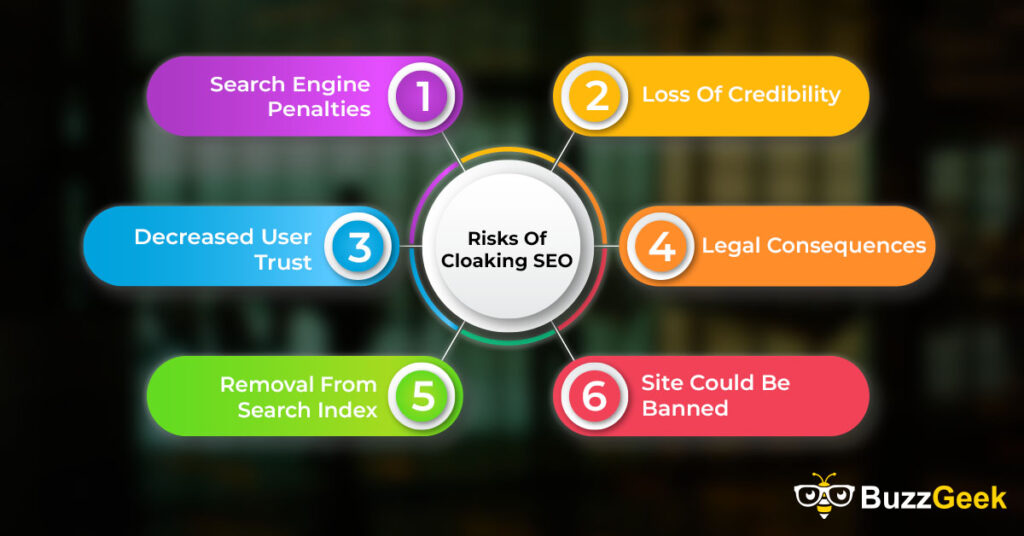
Cloaking SEO comes with many risks. It may seem like an easy way to improve search rankings, however, it can lead to serious problems. Search engines like Google have strict rules against cloaking. When a website is caught using cloaking, it can face penalties or even be banned from search results. Here are some specific risks of using cloaking SEO.
Search Engine Penalties
One of the biggest risks of cloaking is getting penalized by search engines. Search engines like Google regularly check for cloaking. When they find a website using cloaking, they can lower its search rankings. In some cases, the website might even be removed from search results entirely.
This can lead to a significant loss of traffic and revenue. Penalties can be difficult to recover from, making this a serious risk.
Loss Of Credibility
Using cloaking can also cause a website to lose credibility. When users discover that a website is showing different content to search engines and users, they may stop trusting the site.
For example, if users expect one thing from a search result but get something different, they may leave the site quickly. This can hurt the website’s reputation and make it harder to attract and keep visitors.
Decreased User Trust
Cloaking can lead to decreased trust from users. When users feel deceived, they are less likely to return to a website. For example, if a user clicks on a search result expecting certain content but finds something different, they may feel tricked.
This can cause them to lose trust in the website. Over time, decreased user trust can result in lower traffic and fewer repeat visitors.
Legal Consequences
In some cases, cloaking can have legal consequences. When a website uses cloaking to hide illegal content, it could face legal action. For example, a site may cloak to hide copyrighted material from search engines.
When discovered, the website could be sued for copyright infringement. Legal consequences can be costly and damaging to the website’s reputation.
Removal From Search Index
Cloaking can also lead to a website being removed from a search engine’s index. This means the site will no longer appear in search results. For example, if Google catches a website using cloaking, it might remove the site from its index entirely. This can be devastating for the website, as it will lose all traffic from search engines. Getting reindexed after being removed can be very difficult.
Site Could Be Banned
In the worst-case scenario, a website could be banned entirely from search engines. This means it will never appear in search results again. Banning is a severe punishment that is usually reserved for the most serious violations.
When a website is banned, it may need to start over with a new domain name and content. The risk of being banned makes cloaking a very dangerous tactic.
How Search Engines Detect Cloaking
Search engines have advanced ways to detect cloaking. They use both automated tools and human reviewers to find websites that break the rules. Detecting cloaking is a priority for search engines because it protects the quality of search results. Here are some methods search engines use to detect cloaking.
Google Algorithms
Google uses algorithms to automatically detect cloaking. These algorithms scan websites and compare the content shown to users and search engines. When the content is different, the algorithm flags the website for cloaking.
For example, if a website shows a page full of keywords to Google but a different page to users, the algorithm will notice. Google updates its algorithms regularly to improve detection. This makes it harder for websites to use cloaking without getting caught.
Manual Reviews
Search engines also use manual reviews to detect cloaking. Human reviewers are trained to look for signs of cloaking on websites. They compare what the search engine sees with what users see.
When the content is different, the reviewer can report the website for cloaking. For example, if a website shows hidden text to the search engine, the reviewer will flag it. Manual reviews are often used for websites that are already under suspicion.
Crawler Tools
Crawler tools are another method search engines use to detect cloaking. These tools mimic how a search engine views a website. They crawl the site and collect data on what content is shown. The data is then compared to what users see.
When there is a difference, the tool flags the website for cloaking. For example, a crawler tool might find hidden text or links that are only visible to the search engine. These tools are essential in finding cloaking.
IP Spoofing Detection
Search engines use IP spoofing detection to find cloaking. They visit the website from different IP addresses to see if the content changes. When the website shows different content based on the IP address, it may be using cloaking.
For example, the website might show a clean version to Google’s IP address but a different version to other users. IP spoofing detection helps search engines identify this trick and take action against the website.
User-Agent Testing
User-Agent testing is another way search engines detect cloaking. A user-agent is a piece of code that tells the website what kind of browser or device is being used. Search engines use different user-agents to see if the website changes content based on this information.
When the website shows different content to Google’s user-agent compared to a regular user, it could be flagged for cloaking. This method is effective in catching websites that try to deceive search engines.
Preventing Cloaking SEO
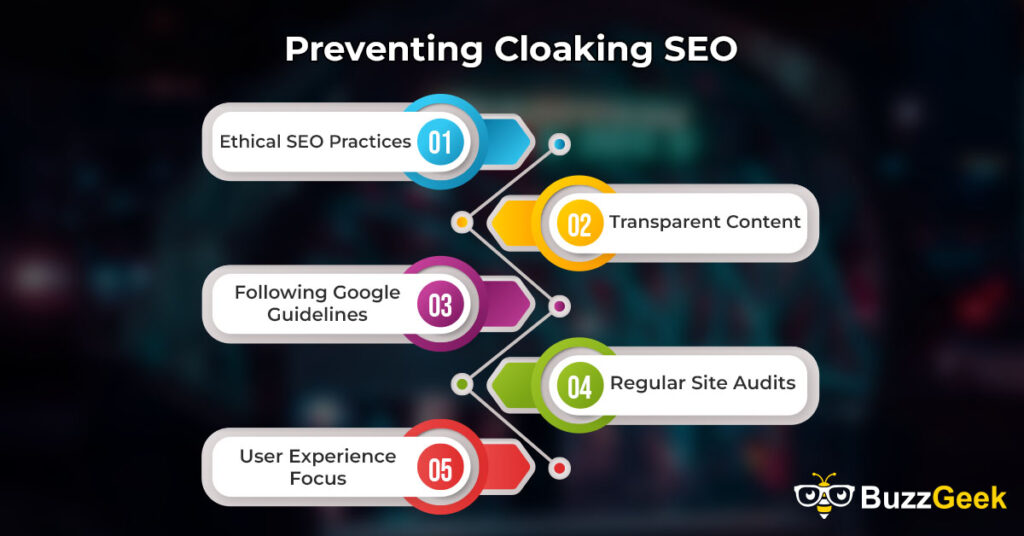
Preventing cloaking SEO is important for any website. Using ethical practices helps avoid penalties from search engines. Websites should always show the same content to both search engines and users. This builds trust and keeps the site in good standing with search engines like Google.
Ethical SEO Practices
Using ethical SEO practices is the best way to prevent cloaking. This means being honest and transparent in how you optimize your site. Always use strategies that improve your site for both search engines and users.
For example, focus on creating high-quality content that answers users’ questions. Avoid tricks like hiding text or showing different content to search engines. Ethical practices not only prevent penalties but also help build a strong, trustworthy website.
Transparent Content
Transparency in content is crucial to avoid cloaking. Make sure the content you create is visible to both search engines and users. Do not hide text, images, or links that are meant only for search engines.
For example, avoid using white text on a white background to hide keywords. Instead, openly display all your content. This approach ensures that search engines and users see the same information, reducing the risk of being flagged for cloaking.
Following Google Guidelines
Following Google’s guidelines is essential in preventing cloaking. Google provides clear rules on what is allowed and what is not. Make sure to read and follow these guidelines carefully.
For example, Google advises against showing different content to search engines than to users. By sticking to these rules, your website will avoid penalties. Regularly checking Google’s updates can also help you stay compliant and avoid accidental violations.
Regular Site Audits
Conducting regular site audits can help prevent cloaking. A site audit is a thorough check of your website to make sure everything is in order. During an audit, look for any hidden content or techniques that might be seen as cloaking.
For example, check if any text is hidden or if different content is shown to search engines. Regular audits help catch potential issues early, allowing you to fix them before they become a problem.
User Experience Focus
Focusing on user experience is another way to prevent cloaking. Always design your website with the user in mind. This means creating content that is helpful and relevant to your audience. When you prioritize user experience, you naturally avoid tricks like cloaking.
For example, write clear and useful content that directly answers user questions. A positive user experience leads to higher engagement and better search rankings, all without the need for cloaking.
FAQs
Is Cloaking Considered A Black Hat SEO Technique?
Yes, cloaking is considered a black hat SEO technique. It is against the rules set by search engines like Google. Cloaking tricks search engines by showing different content to them than to users. This method is deceptive and can lead to serious penalties including being banned from search engine results.
How Can I Tell If A Website Is Using Cloaking SEO?
You can tell if a website is using cloaking SEO by comparing what search engines see with what users see. One way is to view the website as both a regular user and a search engine. When the content is different, the website may be using cloaking. You can use online tools and analyze the website’s content.
What Is The Difference Between Cloaking SEO And Geo-Targeting?
The difference between cloaking SEO and geo-targeting is in their intent and how they are used. Cloaking involves showing different content to search engines and users that is against search engine rules. Geo-targeting is a legitimate technique used to deliver content based on the user’s geographic location.
How Can Cloaking Affect Long-Term SEO Performance?
Cloaking can negatively affect long-term SEO performance. When a website is caught using cloaking, it can be penalized or even banned by search engines like Google. This can lead to a significant drop in the search rankings, loss of traffic, and reduced credibility for that website.
How Does Cloaking Affect User Experience?
Cloaking can harm user experience by showing the users different content than what they expected. When users click on a link expecting one thing but see something different, they may feel deceived. This can lead to frustration, lower trust, and users leaving the site quickly.
Conclusion
Cloaking SEO is a deceptive practice that involves showing different content to search engines and users. While it may seem like a quick way to improve rankings, it carries significant risks. Search engines can penalize or even ban sites that use cloaking. For long-term success, it’s important to follow ethical SEO practices and avoid cloaking to maintain a trustworthy and high-ranking website.