Search engine optimization (SEO) has long been a critical strategy for businesses wanting to improve their online visibility. As the digital landscape evolves, so do the methods used to achieve higher rankings on search engines. A new approach, known as Generative SEO, is emerging as a powerful tool in this field. So, what is Generative SEO?
Generative SEO uses artificial intelligence (AI) to automatically create content for websites. This content is usually designed to improve search engine rankings. Generative SEO automates tasks like content creation and keyword research. It helps businesses save time and stay competitive.
In this guide, we’ll explore the basics of Generative SEO. We’ll also discuss the core concepts, its benefits, and how it differs from traditional SEO.
Key Takeaways
- AI-Powered Content Creation: Generative SEO uses AI to automatically create and optimize content for better search rankings.
- Automation of SEO Tasks: It automates keyword research, content creation, and optimization, saving time and resources.
- Staying Competitive Online: Generative SEO helps websites quickly adapt to search engine algorithm changes and stay competitive.
What Is Generative SEO?
Generative SEO is a method that uses artificial intelligence (AI) to create content. This content is designed to improve search engine rankings. Traditional SEO focuses on keywords and backlinks. Generative SEO goes beyond this. It uses AI to create unique and relevant content for users.
For example, a business can use AI tools to write blog posts or product descriptions. These tools analyze search trends and user behavior. They generate content that matches what people are looking for. This content helps the website rank higher on search engines.
Generative SEO saves time and effort. It also ensures the content is always relevant and up-to-date. AI can quickly adapt to changes in search algorithms. This helps maintain or improve a website’s ranking over time.
Core Concepts Of Generative SEO
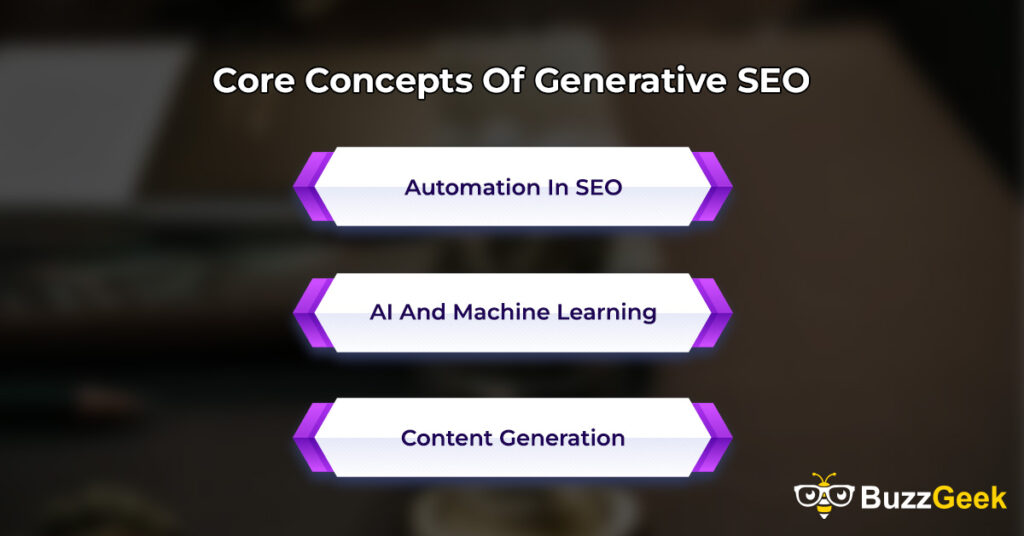
Generative SEO relies on key ideas. These ideas are automation, AI and machine learning, and content generation. Each of these plays a big role in how Generative SEO works. Understanding these concepts is important to use Generative SEO effectively.
Automation In SEO
Automation in SEO means using tools to do tasks automatically. These tools can handle repetitive tasks like keyword research or analyzing website traffic. For example, instead of checking keywords by hand, an automation tool can do it in seconds.
This saves time and reduces errors. Automation makes the SEO process faster and more efficient. For example, if a business needs to analyze 1000 keywords, automation can do it in minutes. Without automation, this task would take hours or even days.
AI And Machine Learning
AI stands for artificial intelligence. Machine learning is a type of AI. It allows computers to learn from data. In Generative SEO, AI and machine learning help create content that matches what users are searching for. For example, AI can analyze thousands of search queries in minutes.
It then uses this data to suggest the best content to create. This technology helps websites stay relevant in search results. AI and machine learning can also predict changes in search trends, helping businesses stay ahead.
Content Generation
Content generation is creating articles, blog posts, and other online content. In Generative SEO, AI tools automatically generate this content. For example, an AI tool can write a 500-word blog post in a few minutes. The content is based on the latest search trends.
This means it is more likely to rank well in search engines. Content generation through AI saves time and ensures the content is always up-to-date and relevant. It can also help businesses produce more content in less time, improving their online presence.
How Generative SEO Works
Generative SEO uses AI to improve search engine rankings. It works by automating tasks like content creation, keyword research, and content optimization. This process makes SEO more efficient and effective. Each part of Generative SEO helps a website perform better in search results.
AI And Content Creation
AI creates content automatically. For example, an AI tool can write a 500-word article in minutes. The tool uses data to decide what content to write. It looks at what users are searching for and creates content that matches.
This content is unique and relevant. Businesses can use AI to create blog posts, product descriptions, and more. This saves time and helps websites rank higher on search engines.
Data-Driven Keyword Research
Data-driven keyword research uses AI to find the best keywords. AI tools analyze large amounts of data quickly. For example, an AI tool can review 1,000 keywords in seconds. It then picks the keywords that are most likely to improve search rankings.
This process is faster and more accurate than manual keyword research. Data-driven keyword research ensures that content targets the right search terms. This helps the content reach more people.
Automated Content Optimization
Automated content optimization uses AI to improve existing content. AI tools analyze the content and suggest changes. For example, an AI tool might suggest adding a specific keyword or shortening a sentence. These changes make the content more search engine-friendly.
Automated content optimization ensures that the content stays relevant and effective. It helps maintain or improve a website’s ranking over time. This process is quick and reduces the need for manual updates.
How Generative SEO Differs From Traditional SEO
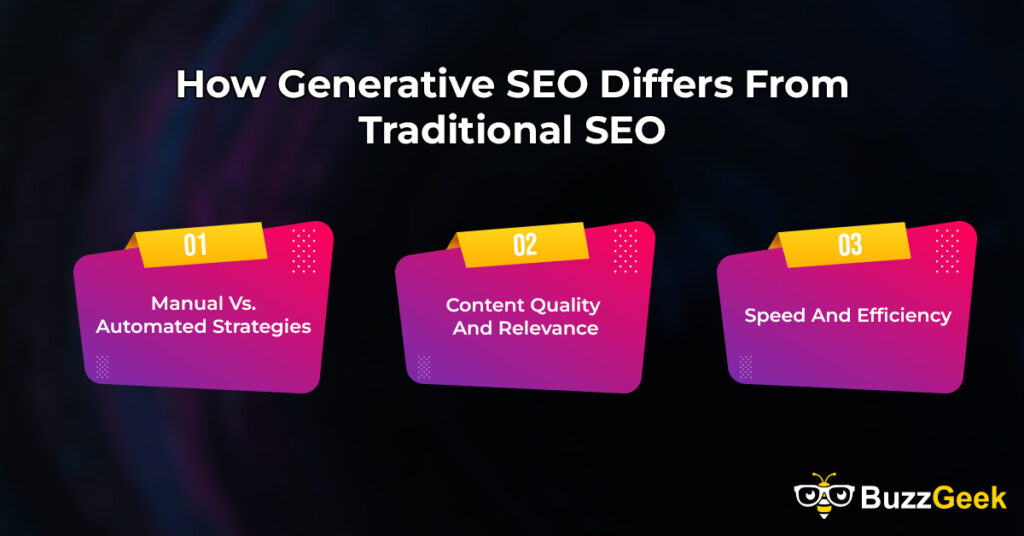
Generative SEO and traditional SEO have different approaches. Traditional SEO relies on manual work. Generative SEO uses AI to automate tasks. These differences impact how content is created, optimized, and updated. Understanding these differences is important for choosing the right strategy.
Manual Vs. Automated Strategies
Traditional SEO involves manual tasks. For example, a person might spend hours researching keywords or writing content. Generative SEO automates these tasks. AI tools can do the same work in minutes.
For example, an AI tool can analyze 1,000 keywords in a few seconds, while a person might take hours. This automation makes Generative SEO faster and more efficient. It reduces the amount of time and effort needed to improve search rankings.
Content Quality And Relevance
Traditional SEO focuses on creating content based on experience and intuition. A writer may choose topics and keywords based on what they think will work. Generative SEO uses data to create content. AI tools analyze what users are searching for and create content that matches.
For example, if data shows that 10,000 people are searching for “best running shoes,” the AI will create content around that topic. This ensures the content is always relevant and targeted. Generative SEO often produces content that better meets user needs.
Speed And Efficiency
Traditional SEO can be slow. It may take days or weeks to create and optimize content. Generative SEO is much faster. AI tools can create, optimize, and update content in minutes. For example, if a business needs 10 blog posts, an AI tool can generate them quickly, saving hours of work.
This speed allows businesses to produce more content in less time. It also helps them respond quickly to changes in search trends. Generative SEO improves both the speed and efficiency of SEO efforts.
Key Technologies Behind Generative SEO
Generative SEO relies on advanced technologies. These technologies make the process faster and more effective. They include AI, machine learning, GANs, and automated content generation tools. Each technology plays a specific role in how Generative SEO works.
Artificial Intelligence (AI)
Artificial Intelligence (AI) is the foundation of Generative SEO. AI can analyze large amounts of data quickly. For example, AI can review 10,000 search queries in a few minutes.
This helps create content that matches what people are looking for online. AI also helps with keyword research, content optimization, and more. It makes SEO more efficient by automating tasks that used to take a lot of time.
Machine Learning (ML)
Machine Learning (ML) is a type of AI. It allows computers to learn from data and improve over time. In Generative SEO, ML helps predict what users will search for next. For example, ML can analyze past search trends to guess what keywords will be popular next month.
This helps businesses stay ahead of changes in search behavior. ML improves the accuracy of keyword research and content creation, making SEO more effective.
Generative Adversarial Networks (GANs)
Generative Adversarial Networks (GANs) are a type of AI used in Generative SEO. GANs can create new, unique content. For example, a GAN can generate a new article based on existing content but with a different style or focus. GANs are useful for creating diverse content that still meets SEO goals.
This technology helps businesses produce more content without repeating the same ideas. GANs add variety to the content, which can attract more users.
Automated Content Generation Tools
Automated content generation tools are software that creates content automatically. These tools use AI and other technologies to write articles, blog posts, and more. For example, an automated tool can generate a 500-word blog post in minutes. This saves time and effort for businesses.
These tools also ensure that content is optimized for search engines. Automated content generation tools help businesses produce high-quality content quickly and consistently.
Benefits Of Generative SEO
Generative SEO offers many benefits. These benefits include scalability, saving time, better personalization, and improved user experience. Each benefit helps businesses grow and reach more customers online.
Scalability
Scalability means the ability to grow easily. Generative SEO allows businesses to create more content quickly. For example, a company can generate 100 blog posts in a month using AI tools. Without AI, this might take a team of writers several months.
Scalability helps businesses keep up with demand. As a business grows, it can produce more content without needing more staff. This makes it easier to expand and reach a larger audience.
Time-Saving
Generative SEO saves a lot of time. AI tools can complete tasks in minutes that might take hours if done by hand. For example, an AI tool can research 1,000 keywords in just a few seconds.
This speed allows businesses to focus on other important tasks. Time-saving is crucial for staying competitive. The faster a business can produce and optimize content, the better its chances of ranking higher in search results.
Enhanced Personalization
Enhanced personalization means creating content that fits the needs of individual users. Generative SEO uses AI to analyze user data and preferences. For example, if a user often searches for “vegan recipes,” the AI can generate content specifically about vegan food.
This makes the content more relevant to each user. Personalized content is more likely to engage users and keep them coming back. Enhanced personalization helps build stronger connections with customers.
Improved User Experience
Improved user experience means making websites easier to use and more enjoyable. Generative SEO helps create content that is clear, relevant, and easy to find. For example, AI can optimize a webpage to load faster or make the layout easier to navigate.
A better user experience keeps visitors on the site longer and encourages them to explore more pages. Improved user experience also leads to higher search engine rankings, as search engines favor websites that users find helpful.
Challenges Of Generative SEO
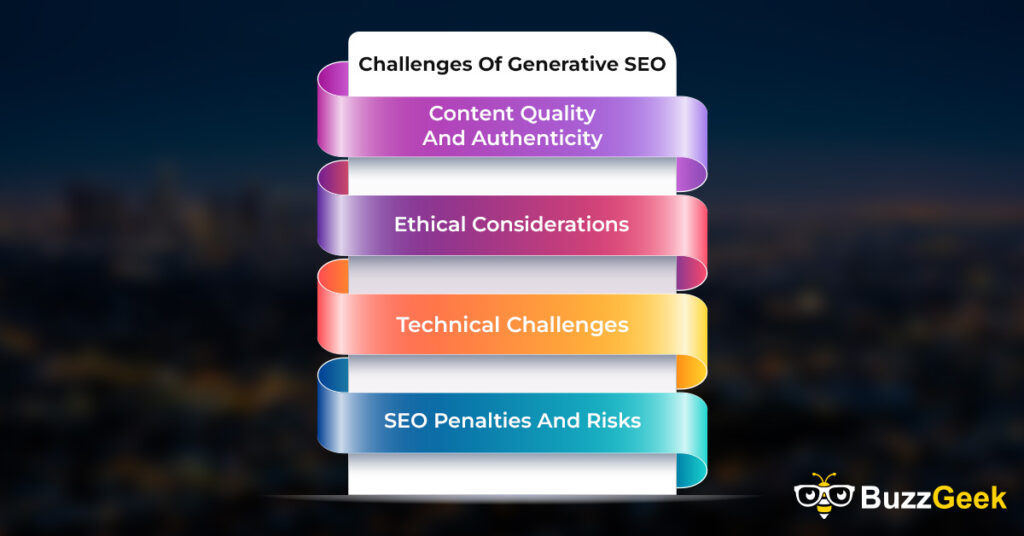
While Generative SEO has many benefits, it also comes with challenges. These challenges include ensuring content quality, addressing ethical concerns, handling technical difficulties, and avoiding SEO penalties. Understanding these challenges is important for using Generative SEO effectively.
Content Quality And Authenticity
Content quality and authenticity are major challenges in Generative SEO. AI-generated content may not always meet high standards. For example, AI might produce content that is repetitive or lacks depth. This can affect the credibility of a website.
Authenticity is also a concern. AI might create content that seems less genuine or too robotic. Ensuring high-quality and authentic content requires careful monitoring. Businesses need to review AI-generated content regularly to make sure it meets their standards and resonates with their audience.
Ethical Considerations
Ethical considerations are important in Generative SEO. Using AI to create content raises questions about originality and transparency. For example, if AI writes an article, should it be clear that it was AI-generated? There is also the risk of creating misleading or biased content. Ethical issues can impact a brand’s reputation.
Businesses need to think about these concerns when using Generative SEO. They should ensure that their content is honest and fair, and that they are transparent about the use of AI.
Technical Challenges
Technical challenges can arise when implementing Generative SEO. AI tools require proper setup and integration with existing systems. For example, an AI tool might not work well with an older website platform. There can also be issues with data management and security.
When the AI tool does not have access to accurate or secure data, it might produce poor-quality content. Technical challenges can slow down the SEO process and require expert help to resolve. Businesses need to ensure they have the right technical support to use Generative SEO effectively.
SEO Penalties And Risks
SEO penalties and risks are a concern with Generative SEO. Search engines like Google have strict guidelines. When AI-generated content does not follow these guidelines, it can lead to penalties. For example, if the AI creates content that is considered spammy or low-quality, the website could be penalized and drop in search rankings.
There is also a risk of over-optimization, where too much focus on SEO harms the user experience. Businesses must be careful to balance SEO strategies with quality content to avoid these risks.
How To Implement Generative SEO
Implementing Generative SEO involves several steps. These include setting up AI tools, integrating them with current strategies, monitoring the results, and measuring success. Each step is important to ensure that Generative SEO works effectively for a business.
Setting Up AI Tools
Setting up AI tools is the first step in Generative SEO. Businesses need to choose the right tools for their needs. For example, they may select an AI tool that specializes in content creation or keyword research. Once chosen, these tools need to be installed and configured.
This may involve connecting the tool to a website or content management system. Proper setup is crucial to ensure the AI works correctly. Businesses should also train their teams on how to use these tools effectively to get the best results.
Integrating With Existing Strategies
Integrating AI tools with existing strategies is the next step. This means combining Generative SEO with what the business is already doing. For example, if a business is already using traditional SEO methods, AI tools can enhance these efforts.
AI can automate tasks like content updates or keyword analysis. Integration ensures that AI supports and improves the current SEO strategy, rather than replacing it entirely. This helps create a more effective and comprehensive approach to SEO.
Monitoring And Adjusting Tactics
Monitoring and adjusting tactics is an ongoing process in Generative SEO. Once AI tools are in use, businesses need to regularly check their performance. For example, they should track how well AI-generated content is ranking in search engines.
When the content is not performing well, adjustments may be needed. This could involve tweaking the AI settings or changing the content strategy. Continuous monitoring helps ensure that Generative SEO remains effective and adapts to changes in search engine algorithms.
Measuring Success Metrics
Measuring success metrics is the final step in implementing Generative SEO. Businesses need to track specific metrics to see if their SEO efforts are working. Examples of these metrics include website traffic, search engine rankings, and conversion rates. AI tools can help gather and analyze this data quickly.
By measuring these metrics, businesses can determine if Generative SEO is helping them achieve their goals. When the results are positive, they can continue to use and refine their Generative SEO strategies. When not, they can make the necessary changes to improve their approach.
FAQs
Is Generative SEO Suitable For Small Businesses?
Yes, generative SEO is suitable for small businesses. It helps small businesses save time and resources. AI tools can create content and do keyword research quickly. This allows small businesses to compete with larger companies. It also helps improve search engine rankings, leading to more customers.
Can Generative SEO Be Integrated With Existing SEO Strategies?
Yes, generative SEO can be integrated with existing SEO strategies. It works well with traditional methods like keyword optimization and content creation. AI tools enhance the strategies by automating tasks and providing data-driven insights. Integration makes the overall SEO approach more effective.
What Metrics Should Be Tracked In Generative SEO?
In generative SEO, businesses should track metrics like website traffic, search engine rankings, and conversion rates. These metrics show how well the SEO efforts are working. Tracking these metrics also helps the businesses understand what is working and what needs improvement.
Is Generative SEO Cost-Effective?
Yes, generative SEO is cost-effective. It reduces the time and effort needed to create content and perform SEO tasks. AI tools can handle these tasks faster and at a lower cost. This makes generative SEO a good investment. Over time, it can lead to better search rankings and more customers.
Can Generative SEO Help With Link Building?
Yes, generative SEO can help with link building. AI tools can create high-quality content that attracts links from other websites. For example, well-written and informative articles are more likely to be shared and linked to by others. This helps improve a website’s authority and search engine ranking.
Conclusion
Generative SEO uses AI to make SEO easier and faster. It helps create content, improves search rankings, and saves time. By using generative SEO, businesses can stay competitive online and adapt quickly to changes. It’s a smart way to boost your website’s visibility and reach more people.